
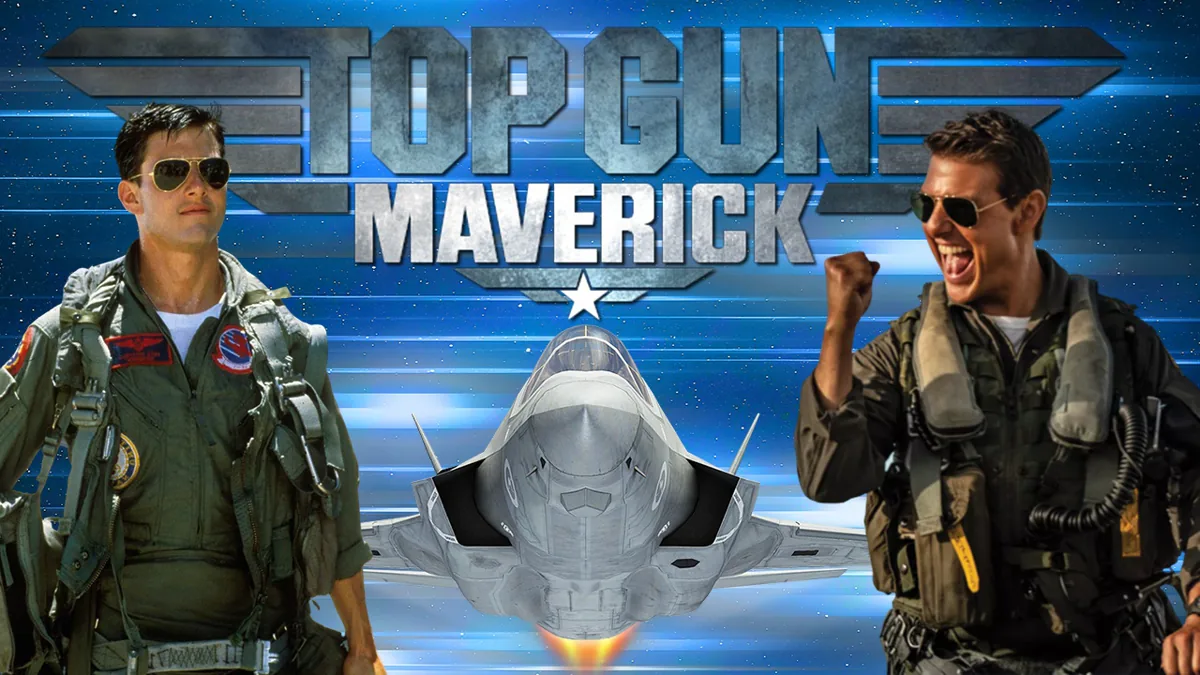
Even years later, in 2026, the film remains a benchmark for blockbuster filmmaking, grossing over $718.5 million at the box office and earning near-universal acclaim. This Top Gun Maverick Review will break down the key elements: the story’s emotional depth, the pulse-pounding action, and an overall verdict that assesses its lasting impact. Whether you’re a fan of the 1986 original or new to the franchise, this analysis highlights why the movie soared to such heights.
The film’s success isn’t accidental. It builds on the legacy of Tony Scott’s Top Gun, but elevates it with modern storytelling techniques while honoring its roots. Critics praised it for surpassing the predecessor, with a 96% Tomatometer score on Rotten Tomatoes and a staggering 99% audience approval rating. In this Top Gun Maverick Review, we’ll explore how the narrative weaves personal growth with high-octane thrills, making it more than just a popcorn flick—it’s a testament to enduring heroism in an era of drones and automation. The cast, including Miles Teller as Lt. Bradley “Rooster” Bradshaw, Jennifer Connelly as Penny Benjamin, and Jon Hamm as Adm. Beau “Cyclone” Simpson, adds layers of interpersonal dynamics that ground the aerial spectacle. As we proceed, keep in mind that this Top Gun Maverick Review avoids major spoilers to preserve the experience for first-time viewers.
Story
The story of Top Gun: Maverick picks up over three decades after the events of the original film, where Captain Pete “Maverick” Mitchell finds himself still pushing the boundaries as a test pilot in the U.S. Navy. Despite his legendary status, Maverick has resisted promotions that would sideline him from flying, embodying the theme of defying obsolescence in a world leaning toward unmanned aircraft. The plot centers on Maverick being called back to the Top Gun program—not as a student, but as an instructor tasked with training a elite detachment of graduates for a covert, high-risk mission. This assignment involves destroying an unauthorized uranium enrichment facility protected by advanced defenses, requiring pilots to navigate a treacherous canyon at low altitudes while evading surface-to-air missiles and potential enemy fighters.
At the heart of the narrative is Maverick’s confrontation with his past. He encounters Lt. Bradley “Rooster” Bradshaw, the son of his late best friend and former wingman, Nick “Goose” Bradshaw, whose death in the original film still haunts Maverick. Rooster harbors deep resentment toward Maverick, blaming him for pulling strings that delayed his career advancement—a decision rooted in a promise Maverick made to Goose’s widow. This personal conflict adds emotional weight, transforming the story from a simple action tale into a poignant exploration of guilt, forgiveness, and legacy. Maverick must balance his role as a mentor with his own unresolved fears, fearing that history might repeat itself if he sends Rooster into danger.
The supporting characters enrich the storyline further. The team of young pilots includes cocky competitors like Lt. Jake “Hangman” Seresin (Glen Powell), who embodies the brash arrogance of a young Maverick, and more collaborative figures such as Lt. Natasha “Phoenix” Trace (Monica Barbaro) and Lt. Reuben “Payback” Fitch (Jay Ellis). Their interactions during training sessions highlight themes of teamwork and rivalry, with Maverick employing unconventional methods—like betting push-ups on simulated dogfights—to foster unity and sharpen skills. Outside the cockpit, Maverick rekindles a romance with Penny Benjamin (Jennifer Connelly), a bar owner and single mother who provides a grounding influence, reminding him of life’s stakes beyond the adrenaline rush.
What makes the story compelling is its blend of nostalgia and innovation. References to the original, such as Val Kilmer’s return as Admiral Tom “Iceman” Kazansky, who now battles health issues while offering sage advice to Maverick, evoke fond memories without feeling forced. The script, penned by Ehren Kruger, Eric Warren Singer, and Christopher McQuarrie, deftly handles these elements, creating a narrative arc that builds tension through character development rather than relying solely on plot twists. Critics have noted how it brings Maverick’s journey full circle, adding depth to the 1986 film while standing on its own. The themes of sacrifice and duty resonate, especially in scenes where Maverick grapples with the Navy’s shift toward drones, symbolized by his interactions with Rear Admiral Chester “Hammer” Cain (Ed Harris), who views pilots like Maverick as relics.
Overall, the story’s strength lies in its emotional core. It’s not just about the mission; it’s about human connections in the face of mortality. This Top Gun Maverick Review appreciates how the film avoids clichés by grounding high-stakes drama in relatable personal struggles, making the characters’ growth feel earned and impactful. At around 131 minutes, the pacing keeps viewers engaged, seamlessly transitioning from introspective moments to intense build-ups.
Action
If the story provides the emotional fuel, the action sequences are the jet engines propelling Top Gun: Maverick into the stratosphere.
Directed with precision by Joseph Kosinski, the film features some of the most exhilarating aerial footage ever captured, thanks to innovative filming techniques that prioritize practical effects over CGI. Tom Cruise, known for performing his own stunts, insisted on real flights, with actors undergoing rigorous training to handle G-forces in actual F/A-18 Super Hornets. This commitment results in visceral, authentic action that immerses viewers in the cockpit, feeling every twist, turn, and inversion.
The training montages set the tone early, showcasing dogfights where pilots engage in close-quarters combat, emphasizing skill over technology. Maverick’s demonstrations, like flying below radar at 100 feet or executing impossible maneuvers, build suspense and highlight the mission’s dangers. These scenes are masterfully edited, with Claudio Miranda’s cinematography capturing the raw intensity of flight—sweat on brows, strained expressions, and the roar of engines. The sound design, blending Harold Faltermeyer’s iconic score with new tracks like Lady Gaga’s “Hold My Hand,” amplifies the adrenaline.
The climax, involving the assault on the enemy facility, is a tour de force of action filmmaking. Pilots must fly through a narrow canyon at supersonic speeds, dodge SAMs, and deliver precise strikes, all while facing fifth-generation fighters. Without spoiling, the sequence rivals the best in the genre, with dynamic camera work that places audiences right in the action. Critics raved about the “thrillingly real aerial dog fights,” noting how the film uses celluloid and practical shots to evoke old-school blockbusters while delivering hypersonic thrills.
Beyond the skies, ground-based action adds variety, from barroom banter to beach football games that echo the original’s volleyball scene but with more inclusivity. These moments humanize the pilots, making the airborne perils more stakes-driven. The film’s action isn’t gratuitous; it’s tied to character arcs, like Rooster’s cautious style clashing with Hangman’s aggression, forcing growth under Maverick’s guidance.
In this Top Gun Maverick Review, the action earns top marks for its realism and excitement. It’s a rare sequel that outdoes the original’s spectacle, proving that practical effects can still dazzle in a CGI-dominated era. The sequences are readable and intense, solving issues from the 1986 film where dogfights sometimes felt chaotic. Overall, it’s the kind of action that demands a big screen, leaving audiences breathless.
Overall Verdict
Top Gun: Maverick is a triumphant sequel that exceeds expectations, blending heart-pounding action with heartfelt storytelling. With an IMDb rating of 8.2/10 and widespread praise for Tom Cruise’s performance and the film’s nostalgic yet fresh approach, it’s one of the best blockbusters of the 2020s. This Top Gun Maverick Review gives it a solid 9/10—essential viewing for action fans, with minor quibbles on predictability offset by its emotional resonance and visual mastery. It proves legacy sequels can soar when done right.
FAQ
Is Top Gun: Maverick better than the original Top Gun?
Yes, many critics and audiences consider it superior, thanks to improved storytelling, character depth, and advanced action sequences that surpass the 1986 film’s spectacle.
Do I need to watch the first Top Gun before seeing Maverick?
While it’s standalone, watching the original enhances appreciation of callbacks, character backstories, and emotional arcs, especially regarding Goose’s legacy.
Is the movie suitable for kids?
Rated PG-13 for intense sequences, language, and thematic elements, it’s generally fine for teens but may be too intense for younger children. Parents note strong language and aerial violence.
How realistic are the flying scenes?
Extremely realistic—the cast trained with Navy pilots, and much footage was shot in real aircraft, minimizing CGI for authenticity.
What awards did Top Gun: Maverick win?
It received numerous nominations, including Oscars for Best Picture, Sound, and Original Song, winning for Sound, and was a box office juggernaut.
Who directed Top Gun: Maverick?
Joseph Kosinski, known for Oblivion and Tron: Legacy, helmed the film with a focus on practical effects.
Is Val Kilmer in the movie?
Yes, he reprises his role as Iceman in a poignant cameo that adds emotional depth.
What’s the runtime?
131 minutes, perfectly paced for its mix of drama and action.
Where can I stream Top Gun: Maverick in 2026?
Available on platforms like Paramount+, Netflix, or for purchase on digital services, depending on the region.
Does the film have a post-credits scene?
No, but stay for the credits to appreciate the crew’s work on the stunning visuals.