
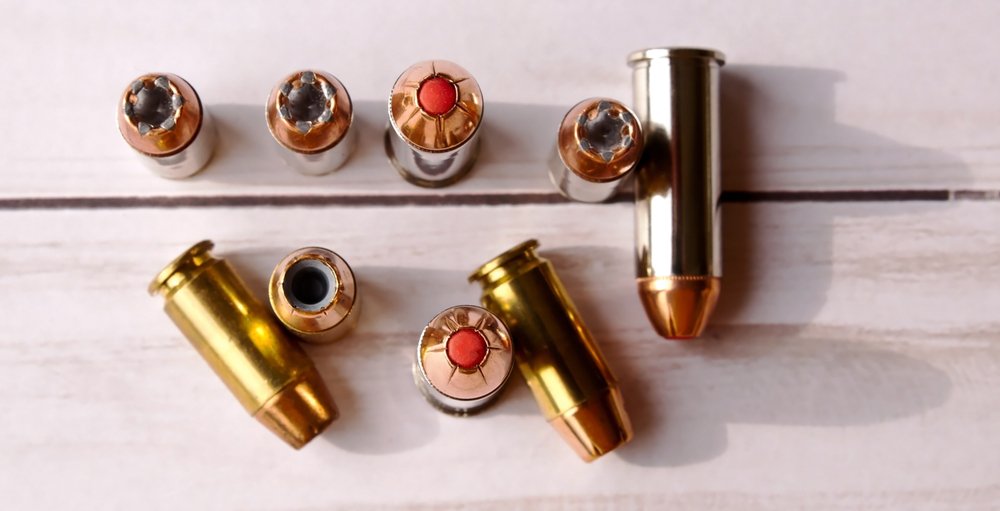
The hollow point has fundamentally transformed the world of firearms ammunition, bridging advancements in ballistics with practical improvements in personal protection. What began as a controversial 19th-century innovation has evolved into the preferred choice for self-defense loads worldwide. This article explores the origins, mechanics, and lasting impact of hollow-point bullets, highlighting how they shifted the focus from simple penetration to controlled expansion and energy transfer.
Historical Origins of the Hollow Point
The story of the hollow point begins in the late 19th century amid colonial conflicts. British forces at the Dum Dum arsenal in India developed early expanding bullets, often called “dum-dum” bullets after the facility. These projectiles featured a hollow or soft tip that allowed the bullet to deform upon impact with soft tissue, creating larger wound channels than traditional full metal jacket (FMJ) rounds.
The design stemmed from battlefield needs during campaigns like the Zulu War of 1879, where standard bullets often passed through targets without sufficient stopping power. The hollow point emerged as a solution to increase lethality against unarmored opponents. However, this expansion caused more severe injuries, leading to international criticism.
In 1899, the Hague Convention banned expanding bullets in warfare among signatory nations, deeming them to cause unnecessary suffering. Military forces shifted to FMJ ammunition, but the technology persisted for civilian, hunting, and law enforcement applications. This ban created a clear divide: hollow points were restricted in international conflict but embraced elsewhere.
Ballistic Principles Behind Hollow Points
At its core, the Hollow Point functions through controlled expansion. The bullet features a cavity in the nose, often jacketed with copper or other metals around a lead core. When striking soft tissue at typical handgun velocities (800–1,400 fps), hydraulic pressure forces the jacket to peel back, causing the bullet to “mushroom” or flatten.
This expansion increases the bullet’s frontal diameter—often doubling or tripling it—creating a wider permanent wound cavity. The temporary cavity, caused by energy transfer, also stretches surrounding tissue more dramatically. Unlike FMJ rounds, which tend to over-penetrate and exit with residual energy, hollow points dump most of their kinetic energy inside the target, reducing the risk of collateral damage.
Ballistic gelatin testing consistently shows hollow points achieving 12–18 inches of penetration (the FBI standard for reliable organ disruption) while expanding reliably. This balance of penetration and expansion is what makes them superior for terminal performance in defensive scenarios.
Comparison with Other Ammunition Types
Traditional FMJ bullets prioritize penetration and reliability in feeding, making them ideal for military use and target practice. However, they often create narrow wound channels and pass through targets, potentially endangering bystanders.
Soft-point bullets offer some expansion but less consistency than modern hollow points. Frangible rounds disintegrate on hard surfaces, minimizing ricochets but sacrificing penetration.
The Hollow Point excels in self-defense because it addresses the primary concern: stopping a threat quickly while limiting over-penetration. Law enforcement agencies, including the FBI, adopted hollow points after real-world incidents highlighted FMJ limitations, such as the 1986 Miami shootout, where over-penetration contributed to officer casualties.
Transformation in Self-Defense Practices
The adoption of hollow points reshaped self-defense doctrine. Before their widespread use, defensive ammunition focused on caliber and velocity alone. The Hollow Point shifted emphasis to terminal ballistics—how the bullet performs inside the body.
In home defense, hollow points reduce the likelihood of a bullet exiting the target and striking family members or neighbors. Defensive training programs now routinely recommend them for concealed carry and home protection.
Studies and real-world data show hollow points increase “stopping power” by creating larger wound channels and transferring energy more efficiently. This leads to faster incapacitation through blood loss and tissue disruption rather than relying solely on central nervous system hits.
Critics argue that modern FMJ can suffice in some cases, but the consensus among experts favors hollow points for most defensive roles due to their reliability and reduced collateral risk.
Legal and Regulatory Aspects
Hollow points remain prohibited in warfare under the Hague Convention, but they are legal for civilian ownership and use in most jurisdictions. In the United States, they are permitted in nearly every state, with minor restrictions (e.g., New Jersey limits the carry of certain hollow points). Many states explicitly recommend them for self-defense.
Internationally, some countries restrict them, but they are standard for police forces globally. The legal distinction reinforces their role as a civilian and law enforcement tool rather than a military one.
Modern Advancements in Hollow Point Technology
Today’s hollow points benefit from decades of refinement. Bonded designs fuse the jacket to the core, preventing separation during barrier penetration (e.g., clothing, drywall). Polymer-tipped variants, like Hornady Critical Defense or Federal HST, ensure reliable expansion at lower velocities common in short-barreled handguns.
Advancements also include controlled-expansion profiles that maintain penetration depth while maximizing wound diameter. These improvements have made hollow points more consistent across calibers, from 9mm to .45 ACP.
While some 2025 discussions suggest alternatives, hollow points remain the gold standard for defensive ammunition due to proven performance.
Conclusion
The Hollow Point has redefined ballistics by prioritizing humane, effective terminal performance over raw penetration. From its controversial origins to its current status as the preferred self-defense round, it has influenced everything from ammunition design to training and legal frameworks. In an era where personal safety demands precision and responsibility, the Hollow Point continues to set the benchmark.