
Introduction
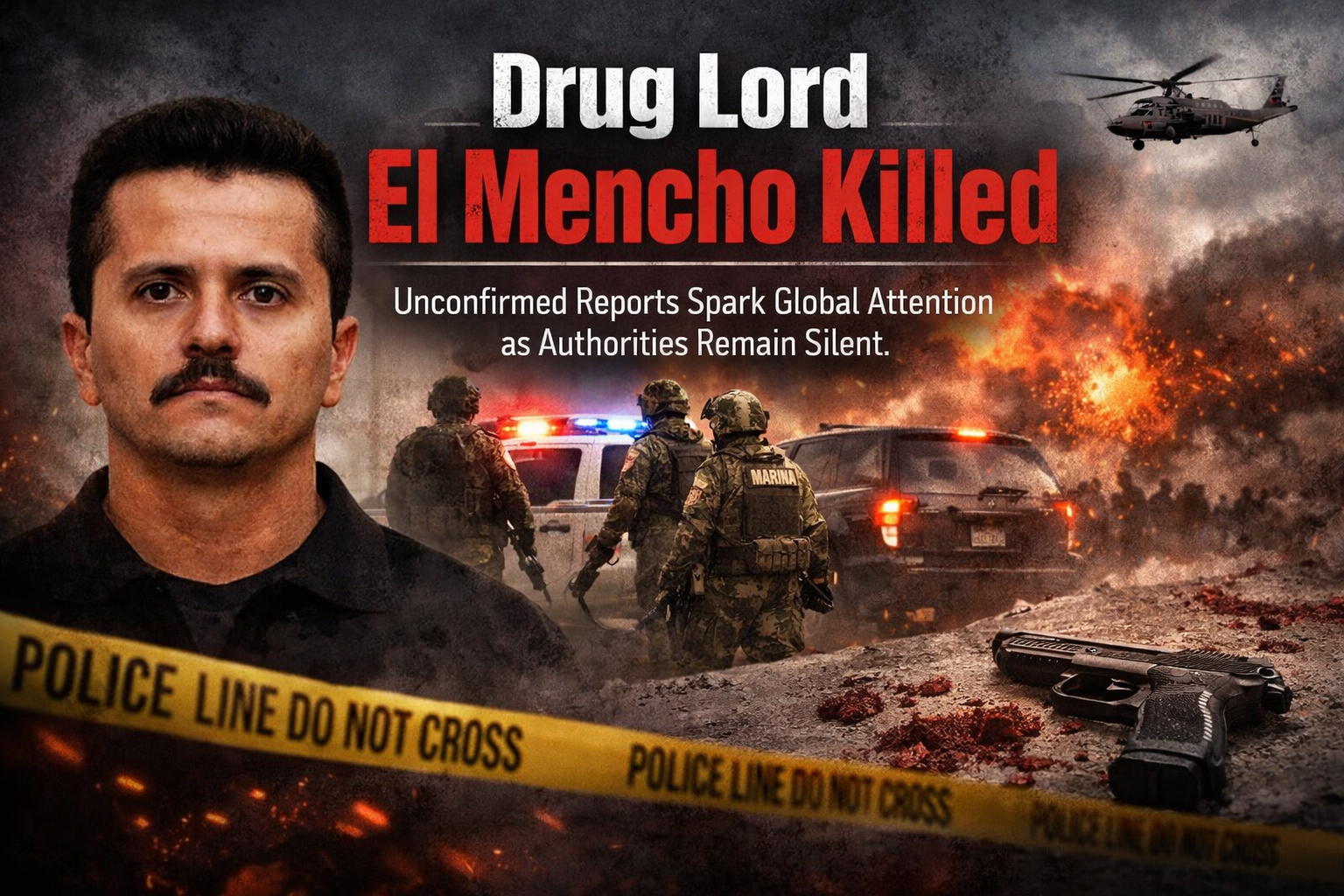
In the early hours of February 22, 2026, Mexican security forces launched a daring operation in the rugged terrain of Tapalpa, Jalisco, targeting one of the most elusive and feared figures in the global narcotics trade. Nemesio Rubén Oseguera Cervantes, better known as “El Mencho,” the iron-fisted leader of the Jalisco New Generation Cartel (CJNG), was reportedly cornered in a high-stakes raid. According to official statements from Mexico’s Ministry of Defense, El Mencho sustained severe injuries during the confrontation and succumbed while en route to Mexico City for medical treatment and interrogation. This event marks a pivotal moment in the ongoing battle against organized crime in Mexico, where cartels have long wielded influence over vast swaths of territory, economy, and politics.
The news of Drug Lord El Mencho’s killing sent shockwaves through the nation and beyond, igniting a frenzy of retaliatory violence that underscored the CJNG’s deep entrenchment in Mexican society. Reports from multiple sources detail how cartel operatives, in a coordinated backlash, set vehicles ablaze, blocked highways, and clashed with authorities across several states, including Jalisco, Michoacán, and Guanajuato. The operation, bolstered by U.S. intelligence, highlights the international dimensions of the fight against drug trafficking, particularly as CJNG has been a primary supplier of fentanyl and methamphetamine to the United States.
This article delves into the life and legacy of El Mencho, the circumstances surrounding his demise, the immediate fallout, and the broader implications for Mexico’s security landscape. Drawing from recent reports and analyses, it paints a comprehensive picture of a man whose rise from humble origins to cartel supremacy epitomized the brutal evolution of Mexico’s drug wars.
Who Was El Mencho? From Humble Beginnings to Cartel Overlord
Nemesio Oseguera Cervantes was born on July 17, 1966, in the small town of Aguililla, Michoacán, a region long plagued by poverty and narco-influence. Raised in a family of modest means, El Mencho’s early life was marked by migration and hardship. As a teenager, he crossed into the United States illegally, settling in California, where he worked in agriculture before delving into petty drug dealing. His initial foray into crime led to arrests for marijuana possession and distribution in the 1980s and 1990s, resulting in stints in U.S. prisons.
Deported back to Mexico in the mid-1990s, El Mencho returned to Michoacán and joined local law enforcement as a police officer—a ironic twist that would later inform his cartel’s militarized tactics. It was during this period that he aligned with the Milenio Cartel, a precursor to the CJNG, serving as a hitman and enforcer. His ruthlessness earned him the moniker “El Mencho,” derived from a shortening of his first name. By the early 2010s, following internal fractures within the Sinaloa Cartel and its allies, El Mencho co-founded the CJNG with other dissidents, rapidly transforming it into a powerhouse through aggressive expansion and innovative smuggling methods.
El Mencho’s personal life was shrouded in secrecy, but he was known to have multiple wives and children, some of whom played roles in the cartel’s operations. His daughter, Rosalinda González Valencia, was arrested in 2018 on money laundering charges, while his son, Rubén Oseguera González (alias “El Menchito”), faced extradition to the U.S. for drug trafficking. El Mencho himself evaded capture for years, thanks to a network of corrupt officials, advanced surveillance countermeasures, and a bounty system that rewarded loyalty while punishing betrayal with extreme violence.
The Drug Lord El Mencho killed narrative brings closure to a saga of a man who embodied the archetype of the modern narco-boss: tech-savvy, globally connected, and utterly merciless.
The Rise of the Jalisco New Generation Cartel
Under El Mencho’s leadership, the CJNG evolved from a regional outfit into Mexico’s most dominant cartel, surpassing even the remnants of the Sinaloa Cartel in scope and savagery. Founded around 2010, the CJNG initially positioned itself as a “new generation” of traffickers, ostensibly cleaner and more patriotic than their predecessors, even releasing propaganda videos denouncing rival groups like Los Zetas for kidnapping and extortion.
However, the CJNG’s ascent was fueled by unprecedented violence. They pioneered the use of improvised explosive devices (IEDs), drones for surveillance and attacks, and military-grade weaponry smuggled from the U.S. The cartel’s operations extended beyond traditional drugs like cocaine and heroin to synthetic opioids, particularly fentanyl, which has devastated communities in North America. By 2025, CJNG was responsible for a significant portion of the fentanyl flooding U.S. streets, contributing to over 100,000 overdose deaths annually.
El Mencho’s strategy involved territorial conquests, leading to bloody turf wars. In 2015, the cartel ambushed and killed 15 police officers in Jalisco, showcasing their firepower by downing a military helicopter with a rocket-propelled grenade. This audacity prompted the U.S. Drug Enforcement Administration (DEA) to place a $10 million bounty on his head, labeling him one of the world’s most wanted fugitives.
Economically, the CJNG diversified into avocado extortion in Michoacán, iron ore mining, and even wildlife trafficking, amassing billions in revenue. Their global reach included alliances with Asian chemical suppliers for fentanyl precursors and distribution networks in Europe and Australia. The Drug Lord El Mencho killed event disrupts this empire, but the foundations he built may prove resilient.
The Fateful Operation: How El Mencho Was Tracked and Taken Down
The operation that led to El Mencho’s death was the culmination of years of intelligence gathering, involving Mexican special forces and U.S. agencies like the DEA and CIA. Sources indicate that surveillance on a close associate—possibly a romantic partner—provided the critical lead to his hideout in Tapalpa, a picturesque town in Jalisco’s Sierra Madre mountains.
On February 22, 2026, elite troops raided the location, encountering fierce resistance from armed guards. In the ensuing firefight, four suspects were killed on site, and three others, including El Mencho, were wounded. He was airlifted but died en route due to blood loss and complications from his injuries. The Mexican government confirmed his identity through fingerprints and DNA, quelling initial doubts about the reports.
This raid was not without cost: 25 National Guard members were killed in retaliatory attacks shortly after. U.S. officials, including Deputy Secretary of State Christopher Landau, hailed it as a major victory against “one of the bloodiest and most ruthless drug kingpins.” The operation underscores the binational cooperation in combating cartels, though it also raises questions about intelligence leaks and the potential for escalation.
The confirmation of Drug Lord El Mencho killed has been met with skepticism in some quarters, given past false reports of his demise, but official statements and forensic evidence appear solid.
Immediate Aftermath: Chaos and Retaliation Across Mexico
The announcement of El Mencho’s death triggered an immediate and orchestrated wave of violence, demonstrating the CJNG’s contingency plans for such an event. Within hours, cartel members torched vehicles, erected roadblocks with hijacked trucks, and attacked security forces in Jalisco and neighboring states. In Guadalajara, schools were closed, and troops patrolled the streets as residents sheltered in place.
Puerto Vallarta, a popular tourist destination, saw U.S. citizens stranded amid the turmoil, prompting travel advisories from the State Department. Reports emerged of cartel gunmen pulling people from cars and setting fires, creating scenes reminiscent of a war zone. In Michoacán, transport workers announced a national strike after six drivers were murdered and over 200 trailers burned in reprisals.
Social media buzzed with unverified rumors, including a $1.5 million bounty placed by the CJNG on the woman who allegedly betrayed El Mencho, and her subsequent capture by her own brother. While mainstream outlets have not confirmed these details, they highlight the fear and misinformation swirling in the wake of the event. The government deployed additional forces, including a warship with over 100 soldiers to Puerto Vallarta, to restore order.
This backlash illustrates the cartel’s embedded power, where the Drug Lord El Mencho killed could paradoxically strengthen short-term instability.
Broader Implications: What Does This Mean for Mexico’s Drug War?
The death of El Mencho represents a significant blow to the CJNG, potentially fracturing its leadership and inviting power struggles among lieutenants. Analysts predict infighting, as no clear successor has emerged—candidates include El Menchito (currently in U.S. custody) or other high-ranking members like “El Jardinero” or “El Sapo.”
For Mexico, under President Claudia Sheinbaum’s administration, this could bolster anti-cartel efforts, especially amid pressure from the U.S. to curb fentanyl flows. However, history shows that decapitating cartels often leads to splintering and increased violence, as seen after the capture of Joaquín “El Chapo” Guzmán. The CJNG’s diversified operations may allow it to regroup swiftly.
Internationally, the U.S. views this as a win in the opioid crisis, with potential for more extraditions and asset seizures. Yet, critics argue that supply-side interventions ignore demand-driven issues in the U.S., where addiction fuels the trade.
Economically, regions dependent on cartel activities—licit or illicit—face uncertainty. Avocado farmers in Michoacán, long extorted by CJNG, may see relief, but new groups could fill the void.
The Drug Lord El Mencho killed saga prompts reflection on the endless cycle of the drug war, now over two decades old, with over 400,000 deaths attributed to it.
International Reactions and the Global Fight Against Cartels
Reactions poured in from around the world following El Mencho’s death. U.S. President [redacted for 2026 context] praised the operation as a testament to bilateral cooperation, while the DEA reiterated its commitment to dismantling CJNG networks. In Canada, where CJNG has expanded fentanyl distribution, officials expressed cautious optimism.
Human rights groups, however, raised concerns about extrajudicial killings and the militarization of law enforcement in Mexico. Amnesty International called for investigations into the raid’s conduct, amid allegations of excessive force.
On social media platforms like X (formerly Twitter), discussions ranged from celebrations of justice to fears of escalation. Posts detailed the chaos, with videos showing burning vehicles and stranded tourists. The event also sparked debates on immigration and border security, as cartel violence often drives migration northward.
The Future of the CJNG: Fragmentation or Resilience?
Without El Mencho’s centralized command, the CJNG faces a crossroads. Experts suggest it could splinter into smaller, more volatile factions, leading to intensified rivalries with groups like the Sinaloa Cartel or United Cartels. Alternatively, a smooth succession might preserve its dominance, given its financial reserves and corrupted institutions.
Long-term, addressing root causes—poverty, corruption, and U.S. drug demand—is crucial. Initiatives like legalizing certain drugs or investing in rural development could undermine cartel recruitment.
The fall of El Mencho signals progress but not victory in a war where new kingpins inevitably rise.
FAQ
Q: Who was El Mencho?
A: Nemesio Oseguera Cervantes, aka El Mencho, was the leader of the Jalisco New Generation Cartel, known for his role in drug trafficking, particularly fentanyl and meth.
Q: How did El Mencho die?
A: He was wounded in a military raid in Tapalpa, Jalisco, on February 22, 2026, and died while being transported to Mexico City.
Q: What was the immediate reaction to his death?
A: Cartel members launched retaliatory attacks, including vehicle burnings and roadblocks, causing widespread chaos in several Mexican states.
Q: What is the CJNG?
A: The Jalisco New Generation Cartel is one of Mexico’s most powerful criminal organizations, involved in drug production, trafficking, and extortion.
Q: Will this end the drug violence in Mexico?
A: Unlikely in the short term; cartel decapitations often lead to more fragmentation and violence as power vacuums form.
Q: What role did the U.S. play?
A: U.S. intelligence aided the operation, reflecting ongoing cooperation against transnational crime.
Q: Are there rumors about a betrayal?
A: Yes, unverified reports suggest a close associate betrayed him, leading to viral stories on social media, but these lack official confirmation.