
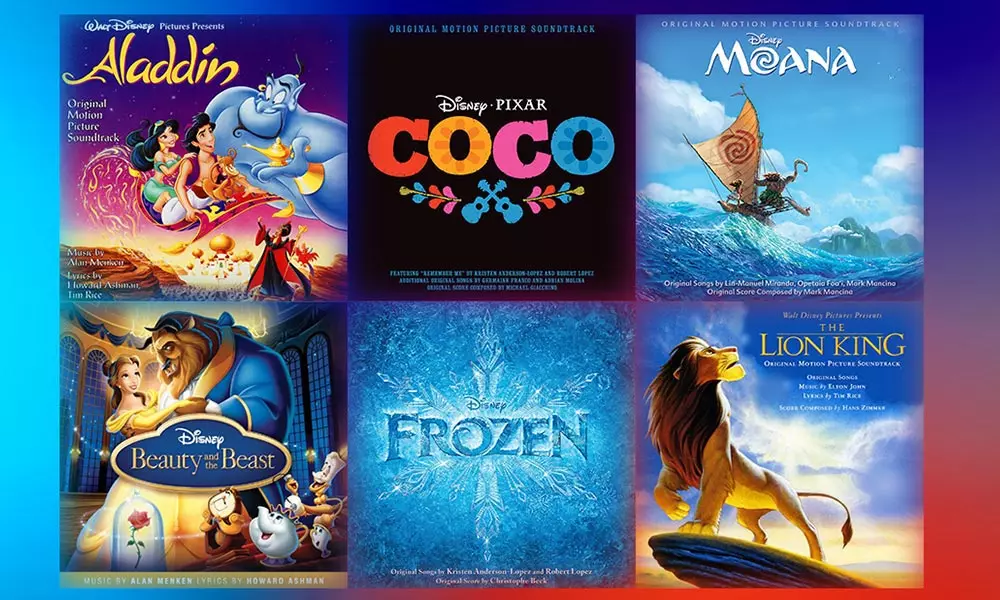
For generations, Walt Disney has been more than just a production company; it has been the architect of our collective childhoods. While the stunning animation and beloved characters form the visual tapestry of our youth, it is the music—the soaring scores and unforgettable songs—that serves as the emotional heartbeat. A single trumpet blast from a fanfare or a gentle piano melody can instantly transport us back to a moment of wide-eyed wonder, sitting cross-legged on the living room floor, utterly captivated.
Best Disney Tracks are not merely songs; they are narrative devices, character introductions, and emotional anchors. They taught us about courage, love, loss, and the audacity to dream. From the golden age of hand-drawn animation to the modern renaissance of CGI storytelling, certain tracks have transcended their films to become cultural cornerstones. These are the tunes that parents sing to their children, that whistle through our heads during moments of nostalgia, and that continue to define what it means to have a “Disney childhood.”
1. “When You Wish Upon a Star” – Pinocchio (1940)
No list of definitive Disney tracks can begin anywhere else. Penned by Leigh Harline and Ned Washington, “When You Wish Upon a Star” is not just the theme song of Pinocchio; it is the unofficial anthem of The Walt Disney Company itself. It serves as the sonic embodiment of the Disney ethos: that hope, faith, and a dream can make the impossible possible.
The song’s magic lies in its simplicity. Sung by Jiminy Cricket, it is a lullaby of aspiration. For children of the mid-20th century, this was the track that taught them the concept of wishing. The gentle arpeggios of the harp, the slow build of the strings, and the sincere vocal delivery frame a promise that resonates regardless of age. It defined childhood magic by establishing that vulnerability—the act of hoping for something—is itself a form of strength. Even today, when the opening notes play over the Disney castle in the studio’s logo, audiences settle in, ready to believe.
2. “A Whole New World” – Aladdin (1992)
If the Golden Age of Disney gave us dreams, the Disney Renaissance (1989-1999) gave us romance, and the pinnacle of that romantic expression is “A Whole New World.” Composed by Alan Menken with lyrics by Tim Rice, this track is a masterpiece of duet storytelling.
What makes this track a definitive childhood staple is its representation of freedom and discovery. For a generation of children who grew up in the early 90s, this song was often the first time they understood the concept of romantic love, but more importantly, it represented a partnership. Aladdin and Jasmine don’t just sing about love; they sing about seeing the world together as equals. The soaring melody, combined with the iconic magic carpet ride visual, created a moment of pure cinematic escape. It was the first (and only) Disney song to win the Academy Award for Best Original Song in the 90s, solidifying its place as a defining track that made every child look up at the stars and imagine a world beyond their backyard.
3. “Circle of Life” – The Lion King (1994)
When The Lion King opens with the rising sun over the African savanna, there is no dialogue. There doesn’t need to be. The opening chant of “Nants ingonyama bagithi Baba” (“Here comes a lion, father”) followed by the explosive crescendo of “The Circle of Life” is arguably the most powerful opening sequence in animation history.
Composed by Elton John with lyrics by Tim Rice and arranged by Hans Zimmer for the score, this track defined childhood magic by introducing complex, existential concepts in a way that felt majestic rather than frightening. It taught children about the interconnectedness of all living things, the cycle of birth and death, and the responsibility that comes with growth. For kids in the 90s, hearing this song was a rite of passage. It was the moment their Disney movie grew up, moving away from fairy-tale castles to a narrative that dealt with grief, legacy, and destiny—all wrapped in a piece of music that remains utterly transcendent.
4. “Let It Go” – Frozen (2013)
Decades after the Renaissance, Disney proved it could still produce a cultural phenomenon that would dominate playgrounds for years. “Let It Go,” performed by Idina Menzel and written by the husband-and-wife team of Kristen Anderson-Lopez and Robert Lopez, did more than sell millions of records; it redefined what a Disney “princess” song could be.
Unlike the traditional “I Want” songs of the past, where a protagonist longs for a man or a better life, “Let It Go” is a song of liberation. It is an anthem for letting go of societal pressure, embracing one’s true self, and finding power in solitude. For a generation of children (and their parents), this track provided a vocabulary for self-acceptance. The song’s structure—a quiet, vulnerable beginning that explodes into a powerful, unapologetic crescendo—mirrors the emotional journey of childhood itself. It defined magic for the 2010s by showing that the most powerful magic is the courage to be authentically yourself.
5. “Hakuna Matata” – The Lion King (1994)
If “Circle of Life” was the spiritual heart of The Lion King, “Hakuna Matata” was its joyful soul. In a film marked by tragedy and usurpation, this song provided the ultimate respite. Written by Elton John and Tim Rice, it introduced a generation to a Swahili phrase that became a permanent part of the global lexicon.
For children, this track defined the ideal of childhood itself: a life without worries. Timon and Pumbaa’s philosophy of problem-free living, set against a bouncy, calypso-infused melody, offered a counterpoint to the pressures of growing up. It validated the desire to play, to eat well, and not to take life too seriously. The song’s brilliance lies in its humor and its iconic sequence showing Simba growing from a cub to an adult. “Hakuna Matata” taught kids that while life has its responsibilities, it’s okay to enjoy the journey and find your family in unexpected places.
6. “Part of Your World” – The Little Mermaid (1989)
Widely credited with kickstarting the Disney Renaissance, The Little Mermaid and its signature song “Part of Your World” represented a return to the grand Broadway-style musical for Disney. Composed by Alan Menken with lyrics by Howard Ashman, this song is the gold standard for the Disney “I Want” anthem.
What makes this track so essential to childhood magic is its depiction of longing. Ariel’s desire to “be where the people are” resonates with every child who has ever felt misunderstood or confined by their current circumstances. Howard Ashman’s lyrics are masterfully specific (“Walking around on those—what do you call ’em?—oh—feet!”), making the fantasy feel tangible. Unlike the belted showstoppers that would follow, “Part of Your World” is a fragile, intimate moment. It taught a generation that wanting something more for yourself isn’t rebellious; it’s human. It remains a masterclass in using song to reveal character interiority.
7. “You’ve Got a Friend in Me” – Toy Story (1995)
With Toy Story, Disney (via Pixar) entered a new era of computer animation. While the visuals were revolutionary, the heart of the film was anchored by a simple, jazzy duet performed by Randy Newman. “You’ve Got a Friend in Me” became the sonic representation of loyalty and friendship for the 90s generation.
Unlike the epic ballads or villainous showstoppers of previous eras, this track is understated and warm. It captures the essence of childhood companionship—the unspoken bond between a child and their favorite toy, or between two friends who have each other’s backs. The song’s longevity is staggering; it has appeared in all four Toy Story films, evolving with the characters but always returning to its core message of constancy. For kids growing up in the digital age, this track grounded the concept of friendship in simplicity and reliability, proving that the most enduring magic is the love between friends.
8. “Colors of the Wind” – Pocahontas (1995)
In the mid-90s, Disney attempted to tackle more mature themes, and no song represents that ambition better than “Colors of the Wind.” Written by Alan Menken and Stephen Schwartz, this Academy Award-winning ballad is a philosophical masterpiece disguised as a pop song.
Sung by Judy Kuhn (dubbing for Pocahontas), the track challenges the listener to see the world through a lens of empathy and environmental stewardship. For children, it was often the first introduction to concepts of colonialism, cultural understanding, and the intrinsic value of nature. The lyrics—”You think the only people who are people are the people who look and think like you”—were radical for a children’s animated film. This track defined magic by expanding its scope beyond personal wishes to a broader understanding of humanity and the earth. It taught kids that magic isn’t just in spells, but in the wind, the trees, and the perspectives of others.
9. “Beauty and the Beast” – Beauty and the Beast (1991)
If “A Whole New World” defined romantic discovery, “Beauty and the Beast” defined romantic realization. This title track, performed by Angela Lansbury as Mrs. Potts, is the emotional climax of the film that became the first animated feature nominated for the Academy Award for Best Picture.
The magic of this track lies in its simplicity and elegance. It is a waltz that captures the quiet, transformative nature of true love—a love that grows not from infatuation, but from understanding and sacrifice. For children, the scene of Belle and the Beast dancing in the ballroom was the ultimate fairy-tale image. But the song goes deeper; it taught a generation that love is about seeing past the exterior. The gentle wisdom in Angela Lansbury’s voice provided a sense of comfort and safety, framing love not as a whirlwind, but as a steady, enduring partnership. It remains the quintessential Disney ballad.
10. “Heigh-Ho” / “Whistle While You Work” – Snow White and the Seven Dwarfs (1937)
To truly understand the definition of childhood magic, we must return to the beginning. Snow White and the Seven Dwarfs was Walt Disney’s gamble—the first feature-length animated film. Its success hinged on music, and the tracks “Heigh-Ho” and “Whistle While You Work” became the blueprints for how music could define character and joy.
While Snow White has many songs, these two tracks encapsulate the spirit of resilience and optimism that defined the Best Disney Tracks formula for nearly a century. “Heigh-Ho” turns a simple march to work into an anthem of camaraderie. “Whistle While You Work” teaches that attitude determines experience. For children of the 1930s and 40s, these were the first Disney earworms—simple, repetitive, and pure. They established the idea that magic isn’t just something that happens to you; it is something you create through community (the dwarfs) and personal mindset (Snow White). Every subsequent Disney song owes a debt to the simple, effective joy of these foundational tracks.
FAQ: The Magic Behind the Music
Q1: What criteria were used to select these top 10 tracks?
The selection was based on a combination of cultural impact, longevity, musical composition, and emotional resonance. Tracks were chosen not only for their popularity but for their ability to define a specific era of childhood, introduce complex themes to young audiences, and maintain relevance across generations. Songs like “When You Wish Upon a Star” and “Let It Go” were included for their seismic impact on both the Disney brand and popular culture at large.
Q2: Why isn’t “Under the Sea” from The Little Mermaid in the top 10?
“Under the Sea” is undeniably a masterpiece of calypso-infused showmanship and won an Academy Award. However, for the purpose of this list, “Part of Your World” was chosen to represent The Little Mermaid. While “Under the Sea” is a spectacular production number that showcases the film’s setting and joy, “Part of Your World” is the emotional core of the narrative. It redefined the character-driven “I Want” song that became the backbone of the Disney Renaissance, making it slightly more defining in terms of narrative structure and childhood longing.
Q3: How have Disney songs changed from the Golden Age to the Modern Era?
Early Disney songs (like “Heigh-Ho”) were often simple, functional, and integrated into the animation as part of the action (diegetic music). The Disney Renaissance, beginning with The Little Mermaid, adopted a Broadway-style structure where songs were used to reveal character psychology and theatrically advance the plot. In the Modern Era (post-2010), tracks like “Let It Go” have moved toward pop-anthem structures, often focusing on themes of individuality, self-empowerment, and breaking traditional molds, reflecting changing societal values.
Q4: Who are the most significant composers in Disney history?
While many have contributed, a few names stand out. Alan Menken is arguably the most significant, having scored the majority of the Disney Renaissance films (The Little Mermaid, Beauty and the Beast, Aladdin, Pocahontas). Howard Ashman, Menken’s lyricist partner until his untimely death, is credited with revitalizing the Disney musical. The Sherman Brothers (Richard and Robert) defined the 60s and 70s with Mary Poppins and The Jungle Book. Elton John and Tim Rice brought pop-rock sensibilities to The Lion King, and Kristen Anderson-Lopez and Robert Lopez have defined the modern era with Frozen.
Q5: Why do Disney songs resonate so deeply with adults, even years later?
Disney songs are crafted using sophisticated musical theory (often borrowed from classical and Broadway traditions) combined with universal themes. They are frequently the first pieces of complex narrative art a child experiences. Therefore, these songs become encoded in memory alongside formative emotional experiences. For adults, hearing these tracks triggers a phenomenon known as reminiscence bump—a psychological tendency to vividly recall memories from childhood and adolescence. The songs act as auditory time machines, bringing back the safety, wonder, and emotional clarity of youth.
Q6: Which Disney song holds the record for the most awards?
“Let It Go” from Frozen holds the record for the most awards won by a Disney song. It won the Academy Award for Best Original Song, the Grammy Award for Best Song Written for Visual Media, and numerous other critics’ awards. Its commercial success and cultural saturation were unprecedented for a Disney track in the 21st century.
Q7: Are there any instrumental scores that define Disney magic as much as the songs?
Absolutely. While this list focuses on songs with lyrics, the instrumental scores are equally vital. Hans Zimmer’s work on The Lion King, Michael Giacchino’s score for Up (particularly “Married Life”), and Paul J. Smith’s score for Snow White are foundational. In fact, many of the songs listed rely heavily on their underscore; for example, “Circle of Life” is as much a Hans Zimmer composition as it is an Elton John song. The interplay between score and song is a hallmark of the Disney magic.