
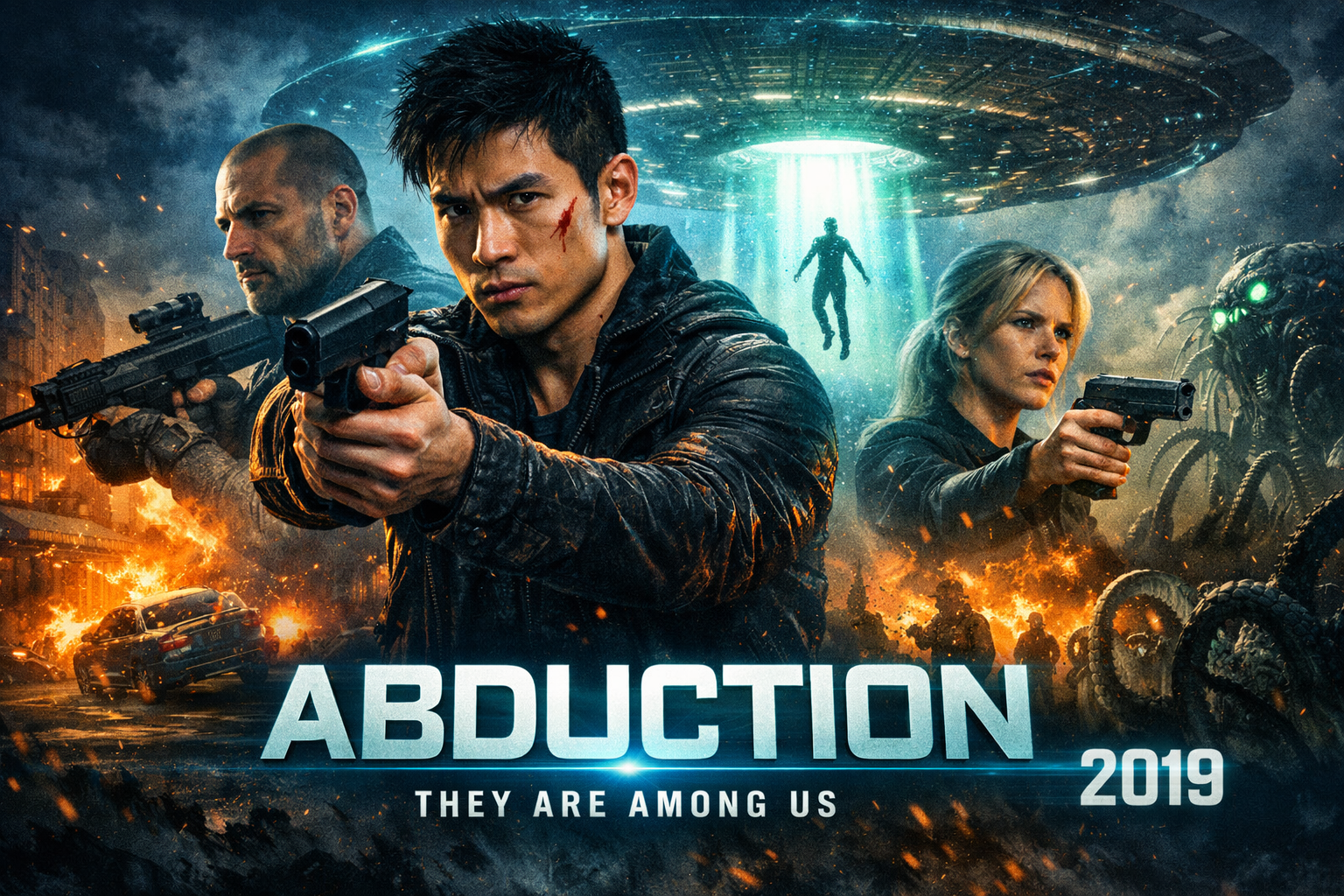
Abduction 2019 is a sci-fi action thriller that blends martial arts with interdimensional horror, starring Scott Adkins in a role that showcases his physical prowess alongside a more vulnerable, character-driven performance. Directed by Ernie Barbarash, this low-budget gem draws inspiration from 1980s classics like They Live and Big Trouble in Little China, but it carves its own niche with a story of alien abductions, time displacement, and family desperation. Released in 2019, Abduction 2019 has garnered a cult following among fans of B-movie action, thanks to its cheesy yet engaging plot and impressive fight choreography by Tim Man. If you’re here for an ending explained, be warned: this article contains full spoilers. We’ll break down the narrative, key twists, and that notoriously disturbing coda that leaves viewers scratching their heads. Abduction 2019 isn’t just about kicks and punches—it’s a tale of existential dread wrapped in green-glowing CGI.
The film follows Quinn (Scott Adkins), a man thrust into a nightmare of amnesia and otherworldly threats. As we delve deeper, Abduction 2019 reveals layers of conspiracy involving shape-shifting beings from another dimension. This article will explore the plot in detail, analyze the characters’ arcs, and unpack the ambiguous finale that has sparked debates online. Whether you’re a Scott Adkins devotee or a sci-fi enthusiast, understanding the ending of Abduction 2019 enhances its rewatch value, turning what could be dismissed as a silly action flick into a thought-provoking experience.
Plot Summary: Setting the Stage for the Chaos
To fully grasp the ending of Abduction 2019, we need to recap the story from the beginning. The movie opens with a disorienting sequence in a dimly lit facility that feels like a cross between a slaughterhouse and an alien lab. Bodies lie on slabs, each affixed with glowing green spider-like devices on their necks—these are control mechanisms used by the antagonists to enslave humans. Quinn awakens amid this horror, breaking free and fighting off guards whose eyes flash an eerie green, indicating possession or augmentation by the interdimensional beings. He discovers his young daughter, Lucy, trapped in a cage—alive but catatonic, unresponsive to his pleas.
Quinn’s escape is frantic: he battles a hooded, faceless figure (played by Daniel Whyte) and tumbles through a portal, landing in a fountain in modern-day Ho Chi Minh City, Vietnam, in 2018. Here’s the first major twist—Quinn was originally from 1985 London, where his daughter was abducted. He hasn’t aged a day, but over three decades have passed on Earth. Suffering from severe amnesia and a debilitating stutter, Quinn stumbles through the city, unable to speak the language or recall his identity. He steals a cartoonish jacket from a clothesline, apologizes awkwardly to a child, and gets into scrapes with locals and police, showcasing Adkins’ ability to portray vulnerability alongside his trademark athleticism.
Parallel to Quinn’s story is that of Conner (Andy On), a Hong Kong-based assassin trying to go straight for his wife, Maya (Lili Ji). Conner’s arc starts more grounded: he’s on what he claims is his last job, but betrayal leads to a home invasion by Russian mobsters. He fights them off in a handcuffed brawl, but then Maya is snatched by the same cloaked beings who took Lucy. This propels Conner into the supernatural fray, making him a “take-charge badass” as he hunts for answers.
The two protagonists’ paths converge through Dr. Anna Pham (Truong Ngoc Anh), a psychiatrist who treats Quinn at a hospital. Anna, initially skeptical, witnesses strange phenomena at the fountain—disruptions in reality that hint at portals. An old man with a chi-detecting machine explains the lore: these beings are not traditional aliens but interdimensional entities tied to Earth’s natural energies like feng shui. They harvest human “chi” (life force) to sustain themselves, using the green spider devices to create an immortal army of controlled humans. The abductions are part of a larger conspiracy to invade or dominate our dimension.
As the trio teams up, tensions rise. Quinn is temporarily possessed by a spider device, leading to a spectacular fight with Conner—one of the film’s highlights, blending balletic martial arts with whooshing sound effects reminiscent of Power Rangers. They traverse dimensions, battling shape-shifting wizards and minions, all while piecing together the beings’ motives.
Key Characters and Their Motivations
Abduction 2019 shines through its characters, who elevate the pulpy script. Quinn, played by Adkins, is a departure from his usual stoic heroes. His stutter and hunched posture convey the trauma of displacement, making his journey from confused amnesiac to determined father deeply compelling. Adkins fans appreciate this against-type role, where action is defensive rather than aggressive—most fights stem from survival, not bravado.
Conner, portrayed by Andy On, provides the cool, calculated contrast. As a former military operative turned gangster, his motivation is raw: rescue his wife or die trying. Their alliance feels earned, built on shared loss, and their climactic duel (while Quinn is controlled) tests their bond.
Dr. Anna adds heart and skepticism-turned-belief, grounding the fantastical elements. She’s no damsel; she actively aids in the investigations and fights. Supporting roles, like Mike Leeder as a enslaved human, add flavor to the alien hierarchy.
Themes of family, identity, and the unknown permeate Abduction 2019. The film questions reality: Are these beings aliens, demons, or something tied to human energy? The chi-harvesting motif echoes Eastern philosophy, blending with Western sci-fi for a unique flavor.
Breaking Down the Ending: The Rescue and the Twist
Now, to the heart of Abduction 2019: the ending explained. After uniting, Quinn, Conner, and Anna infiltrate the interdimensional realm using the old man’s machine and clues from the fountain portals. They face hordes of controlled humans and the hooded leaders, who wield kung fu staffs and teleportation abilities. The action peaks in a multi-dimensional showdown, where Quinn and Conner showcase their skills against an army of green-eyed minions.
They locate Lucy and Maya in cages similar to the opening scene. Lucy remains a child—time flows differently in the alien dimension, explaining why Quinn hasn’t aged and why his daughter is unchanged since 1985. The rescue is brutal: Quinn fights the main hooded antagonist, destroying spider devices and freeing captives. Conner battles valiantly but is gravely wounded, sacrificing himself to hold off reinforcements so Quinn and Anna can escape with the girls.
Back on Earth, it seems like a victory. Quinn reunites with Lucy, who slowly regains responsiveness. Anna becomes a surrogate figure, hinting at a new family unit. But Abduction 2019 doesn’t end on a high note—enter the disturbing coda. In a post-climax scene reminiscent of Prince of Darkness, Quinn has a nightmare vision. He sees Conner, not dead but transformed, with glowing green eyes, implying the beings have possessed him or that the invasion continues through him. The camera lingers on a subtle spider mark on Quinn’s neck, fading in and out, suggesting he might still be under influence or that the cycle repeats.
This ambiguity is key: Did they truly win? The beings’ existential threat—tied to chi and dimensions—feels ongoing, like an unstoppable force. Some interpretations posit that the entire story is a loop, with abductions perpetuating across time. Conner’s fate is left open-ended; reviews note confusion over what happens to him, perhaps dying heroically or becoming a vessel for the entities. The coda evokes dread, implying humanity’s chi is finite, and the beings will return.
Theories and Analysis: What Does It All Mean?
Fans of Abduction 2019 have spun theories about the ending. One popular idea is that the film critiques modern disconnection—Quinn’s stutter symbolizes communication breakdown in a globalized world, while the aliens represent unseen forces draining life’s essence (chi as a metaphor for energy in a tech-driven society).
Another theory: The director’s cut (vs. the producer’s cut) amplifies the horror, with more explicit CGI showing the beings as incomprehensible entities, not just cloaked fighters. The time displacement highlights parental guilt; Quinn’s failure to protect Lucy in 1985 echoes through eternity.
Critics call the ending “dumb” or “confusing,” but that’s its strength—Abduction 2019 embraces B-movie absurdity, leaving room for interpretation. It’s not about tidy resolutions but the horror of the unknown.
Conclusion
Abduction 2019 may not be a blockbuster, but its blend of action, sci-fi, and horror makes it memorable. The ending, with its rescue undercut by a chilling coda, elevates it beyond typical martial arts fare. If you haven’t seen it, watch for Adkins’ performance and the wild lore. Abduction 2019 proves low-budget films can punch above their weight.