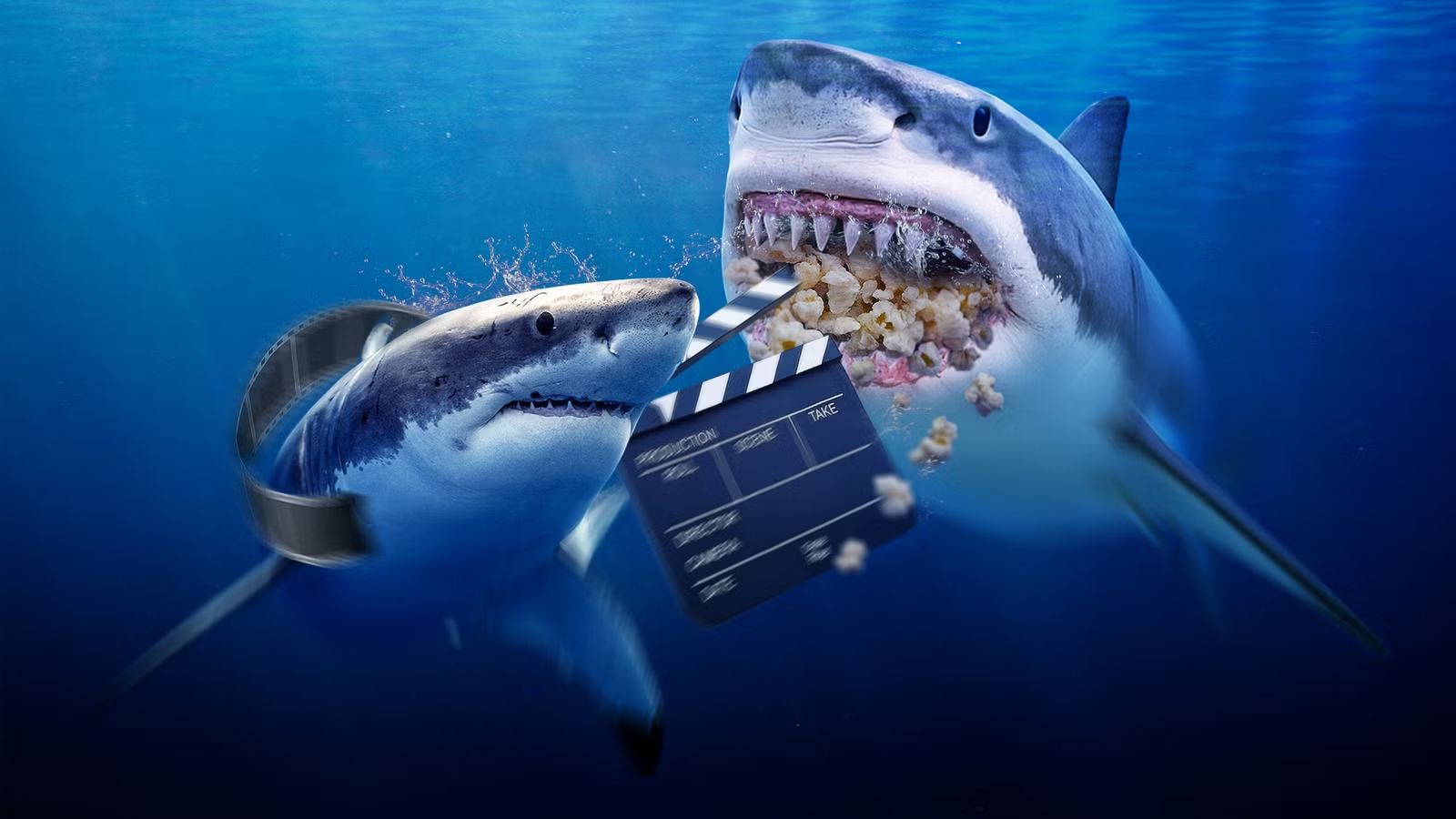
Sharks have long fascinated filmmakers and game developers alike, serving as symbols of primal fear, oceanic mystery, and raw power. From the mechanical terror of Jaws to the hyper-realistic digital beasts in modern blockbusters and the interactive predators of open-world games, the Animation of Shark stands as one of the most technically demanding feats in visual entertainment. This article dives deep into the behind-the-scenes world of shark animation, exploring its evolution, tools, challenges, and real-world applications across cinema and interactive media. Whether it’s the graceful yet deadly glide of a great white or the massive bulk of a megalodon, the Animation of Shark requires a perfect blend of artistry, science, and cutting-edge technology. Over the following sections, we will uncover how animators breathe life into these apex predators, using everything from practical effects to AI-driven simulations. By the end, you’ll appreciate why the Animation of Shark remains a benchmark for realism in underwater visuals.
A Brief History of Shark Depiction: From Mechanical Monsters to Digital Dominance
The history of shark representation in entertainment traces back to practical effects long before computers could render a fin. Steven Spielberg’s 1975 classic Jaws relied on three massive animatronic sharks nicknamed “Bruce,” each controlled by hydraulics and pneumatics. These 25-foot mechanical beasts weighed thousands of pounds and were towed by boats or operated from underwater platforms. Malfunctions plagued production—Bruce sank, jammed, or shredded in saltwater—forcing Spielberg to hide the shark for most of the film. This accident-born restraint created legendary suspense, proving that imperfect practical effects could outperform early attempts at full visibility. The Animation of Shark in this era wasn’t digital but purely mechanical engineering.
By the 1990s and early 2000s, CGI transformed the landscape. Films like Deep Blue Sea (1999) mixed animatronics with early computer-generated imagery. Then came Pixar’s Finding Nemo (2003), where the great white shark Bruce (named after the Jaws prop) became a fully animated character. The Pixar team took scuba-diving lessons and studied real shark locomotion, light refraction, and water physics. Early renders looked photorealistic, so artists intentionally stylized the ocean to remind viewers they were watching animation. This marked a pivotal shift: the Animation of Shark moved from hardware to software, enabling expressive, character-driven performances impossible with machines.
In the 2010s, hybrid approaches emerged. The Shallows (2016) combined practical shark builds with CGI enhancements for realistic attacks on a lone surfer. The Meg (2018) pushed boundaries with a 75-foot prehistoric megalodon rendered entirely in CGI. Today, the Animation of Shark in games has evolved from 2D sprites in 1980s titles like Jaws on NES to sophisticated real-time 3D models in Sea of Thieves and Maneater. This progression reflects broader technological leaps in rendering, physics simulation, and artificial intelligence.
Core Techniques Behind the Animation of Shark
Creating believable shark movement demands expertise across multiple disciplines. The process begins with modeling. Artists use digital sculpting tools like ZBrush to craft high-poly meshes capturing every denticle (tiny tooth-like scales on shark skin), gill slits, and caudal fin details. Reference scans from real sharks or museum specimens ensure anatomical accuracy—sharks lack rigid bones, relying on flexible cartilage that affects how skin deforms during turns.
Next comes rigging. A custom skeleton with hundreds of control points handles the undulating tail propulsion unique to sharks (unlike side-to-side fish motion). Advanced rigs incorporate secondary animation for fins and gills. In films, Maya remains the industry standard for this stage.
Animation itself blends keyframing with procedural techniques. Animators study slow-motion footage of real sharks to replicate the powerful, efficient tail beats that propel the body forward. For fluid realism, physics-based tools like Ziva Dynamics simulate muscle contractions, skin sliding over cartilage, and water resistance. In The Meg, Ziva helped create believable skin stretching and jiggle on the massive megalodon without manual tweaking for every frame.
Water interaction adds complexity. Fluid simulation software (often Houdini) generates realistic caustics (light patterns on the seafloor), bubbles, particulate matter, and drag effects. Lighting teams use physically based rendering to handle light attenuation underwater—colors desaturate with depth, creating the moody blue-green palette viewers expect. Rendering farms process millions of rays per frame for photorealistic results.
In games, real-time constraints demand optimizations. Artists use lower-detail meshes with normal maps for denticles, baked lighting, and AI-driven pathfinding instead of full fluid sims. The Animation of Shark in interactive titles prioritizes performance over offline perfection, yet modern engines like Unreal deliver stunning results through clever LOD (level-of-detail) systems.
Case Studies: Iconic Examples of Animation of Shark in Films
Finding Nemo remains a masterclass in stylized yet convincing underwater animation. Pixar’s animators created Bruce with exaggerated expressions for comedy while grounding his swimming in real biomechanics. Particulate matter and caustic lighting gave depth to every scene; the team dialed back hyper-realism after test screenings to preserve the cartoon feel. The Animation of Shark here balanced terror and humor perfectly, influencing an entire generation of animated sea life.
The Meg showcased blockbuster-scale Animation of Shark techniques. Sony Pictures Imageworks and Scanline VFX built a megalodon using photographic references of great whites scaled up dramatically. Full-body and facial close-up scans informed the model. Ziva Dynamics handled muscle and skin simulation for natural movement at massive scale. A dedicated “Animating Sharks” featurette reveals how artists iterated quickly in Maya Viewport 2.0, tackling challenges like visibility in murky water and integrating with live-action plates shot by Jason Statham. The result: a predator that felt both prehistoric and terrifyingly alive.
The Shallows blended practical and digital methods. Crews constructed a physical shark prop for close interaction with Blake Lively, then enhanced it with CGI for long-distance attacks and dynamic water splashes. Designers emphasized feminine traits for added menace, basing the creature on real great white behaviors. This hybrid approach demonstrated how the Animation of Shark can feel immediate and visceral when practical elements meet digital polish.
DreamWorks’ Shark Tale (2004) took a comedic route with anthropomorphic sharks voiced by stars like Robert De Niro. Maya and RenderMan powered the pipeline, with custom tools for bubble trails, fin gestures, and underwater occlusion. The Animation of Shark here prioritized personality over biology, proving sharks could star in family-friendly stories.
Shark Animation in Video Games: Real-Time Challenges and Breakthroughs
Games demand the Animation of Shark to respond instantly to player input while maintaining believability across vast oceans. Early titles like NES Jaws featured simple side-scrolling wiggles. Modern examples shine brighter.
In Sea of Thieves, Rare engineered graceful shark AI using mathematical arcs for pursuit paths, dynamic obstacle avoidance, and server-side performance optimization (running on a single core). Sharks feel alive because their movement follows real fluid dynamics without bogging down multiplayer sessions.
- Maneater* (2020) casts players as the shark protagonist. Tripwire Interactive hand-keyframed every animation to convey water resistance and powerful tail thrusts. Blood VFX, evolution systems, and open-world lighting create immersive hunting grounds. The Animation of Shark here drives gameplay—players feel the weight and speed of a growing apex predator.
Other titles like Grand Theft Auto V hide sharks as Easter eggs with realistic ambient swimming, while mobile hits like Hungry Shark Evolution use simplified 3D rigs for fast, addictive action. The key difference from films: real-time rendering forces trade-offs in polygon count and simulation complexity, yet engines like Unity and Unreal now deliver near-cinematic results on consoles and PCs.
Challenges and Innovations in the Animation of Shark
Animating sharks presents unique hurdles. Cartilage flexibility requires soft-body deformation not needed for bony creatures. Tail propulsion must look powerful yet efficient—too much wiggle looks fish-like and wrong. Underwater lighting scatters colors unpredictably, demanding specialized shaders. In games, AI must navigate 3D spaces intelligently without pathing glitches or performance hits.
Innovations solve these daily. Procedural animation tools generate infinite variations from base cycles. Machine learning now predicts realistic swimming from reference footage. Fluid solvers in Houdini handle millions of particles for bubbles and currents. For the Animation of Shark, studios increasingly combine mocap reference (divers mimicking fin beats) with simulation layers. Future breakthroughs include real-time ray tracing for caustics and AI-assisted rigging that adapts to any shark species automatically.
Tools and Software Powering Modern Animation of Shark
Industry leaders rely on Autodesk Maya for rigging and animation, Houdini for effects and fluids, and ZBrush for modeling. Rendering uses Arnold, RenderMan, or Chaos V-Ray. Games lean on Unreal Engine or Unity with custom plugins. Free alternatives like Blender enable indie creators to produce impressive shark animations, as seen in countless tutorials modeling realistic great whites from reference images.
The Future of Animation of Shark
AI will automate repetitive tasks like secondary fin motion, while VR and AR will let audiences “swim” alongside digital sharks. Real-time global illumination and neural rendering promise photorealism in games indistinguishable from films. The Animation of Shark will continue evolving, driven by ever-greater demands for immersion and spectacle.
Conclusion
From Bruce the mechanical nightmare to Ziva-powered digital megalodons and AI sharks patrolling virtual seas, the behind-the-scenes story of shark animation reveals extraordinary human ingenuity. The Animation of Shark combines biology, physics, and creativity to deliver moments of terror, wonder, and fun that captivate millions. As technology advances, these oceanic predators will only grow more lifelike—reminding us why sharks remain the ultimate icons of the deep.
FAQ: Common Questions About Animation of Shark in Movies and Games
Q1: How long does it take to create one minute of Animation of Shark footage? In films, a single complex underwater shot can require weeks of animation, simulation, and rendering by teams of 10–50 artists. Games streamline this to days per animation cycle due to real-time constraints.
Q2: What makes shark movement different from that of other fish in the Animation of Shark? Sharks use powerful up-and-down tail beats rather than side-to-side motion. Riggers build flexible cartilage-based skeletons to capture this unique propulsion accurately.
Q3: Which software is most commonly used for the Animation of Shark? Maya and Houdini dominate films; Unreal Engine and Unity power games. ZBrush handles modeling, while Ziva Dynamics adds realistic muscle simulation.
Q4: Why did early CGI sharks sometimes look unrealistic? Water caustics, light scattering, and skin texture were hard to simulate. Modern tools solve these, but older films like early Jaws sequels relied on practical effects instead.
Q5: Do game developers use the same techniques as movie studios for shark animation? Core principles overlap (rigging, texturing), but games prioritize real-time performance with baked lighting and simpler physics, while films use offline rendering for ultimate detail.
Q6: What was the biggest challenge in The Meg’s Animation of Shark? Scaling a megalodon realistically while maintaining believable swimming and integrating with live-action plates in murky water required massive computational resources and iterative testing.
Q7: Can indie developers create professional Animation of Shark today? Yes—Blender’s free tools and online tutorials allow high-quality results. Many viral shark animations on YouTube prove that talent and reference footage matter more than expensive software.
Q8: How do animators make sharks scary yet believable? They combine real anatomical reference with subtle secondary motion (gills, fins) and predatory AI behaviors. Lighting and camera angles amplify menace without exaggeration.
Q9: Will AI replace human animators in future shark projects? AI will assist with tedious tasks like crowd simulation or basic cycles, but human creativity remains essential for nuanced performance and storytelling.
Q10: Where can I learn the Animation of Shark myself? Start with Blender or Maya tutorials focused on shark modeling and rigging. Study real shark footage, then practice fluid simulation and underwater lighting for authentic results.