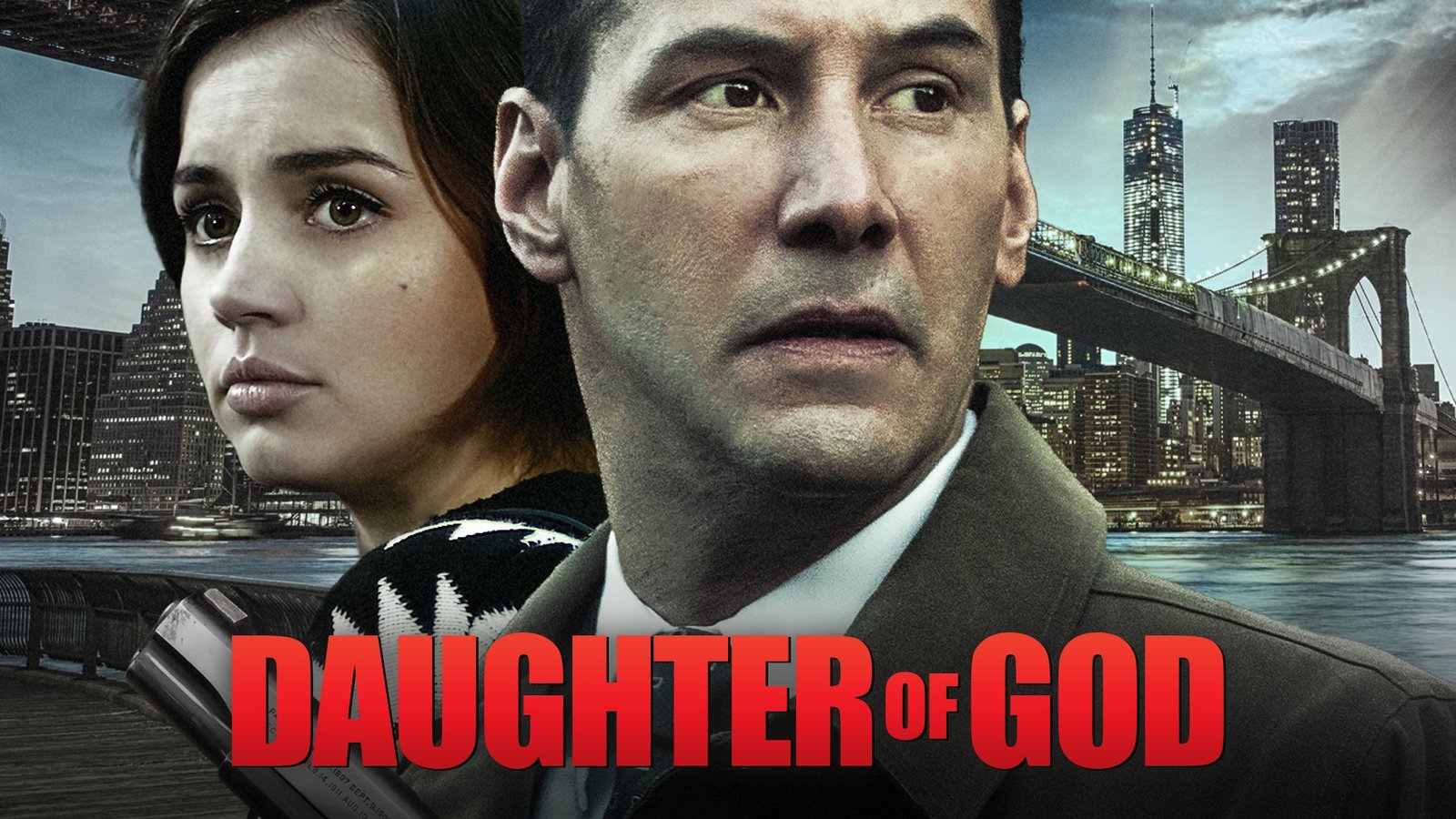
The fascinating and troubled history of the 2016 film Daughter of God, a project caught between two identities. What was intended as a surreal, bilingual drama became the center of a Hollywood dispute, resulting in two different versions of the same film. Below, we unravel the plot, meet the cast, and dive into the hidden meanings behind this misunderstood movie.
| Aspect | Details |
|---|---|
| Original Title | Daughter of God (Director’s original vision) |
| Alternate Title | Exposed (Studio-released edit) |
| Director | Gee Malik Linton (credited as Declan Dale on studio cut) |
| Starring | Ana de Armas, Keanu Reeves, Mira Sorvino, Christopher McDonald |
| Genre | Psychological Thriller / Drama |
| Core Conflict | A detective’s investigation into his partner’s death intersects with a young woman’s experience of traumatic visions. |
The Strange Case of Two Films in One
To understand Daughter of God, one must first understand its controversial journey to the screen. Originally conceived, written, and directed by Gee Malik Linton, the film was a deeply personal project shot in New York City in late 2014. It was a surreal, bilingual drama that aimed to tackle heavy themes such as child sexual abuse, violence against women, police corruption, and trauma within the Latin American community in the U.S.. The original narrative was deliberately complex, weaving together the stories of a grieving detective and a young Latina woman named Isabel, who believes she is seeing angels.
However, a significant problem arose during post-production. The distribution company, Lionsgate Premiere, had reportedly expected a more straightforward crime thriller centered on its star, Keanu Reeves. Fearing the original film was too artistic and difficult to market, the studio re-edited the footage to shift the focus onto Reeves’ character, Detective Galban. They cut large portions of the subplots involving Latino and Black characters and reframed the movie as a conventional police procedural.
This drastically changed the film’s meaning and tone. In response, director Gee Malik Linton demanded his name be removed from the project. Consequently, the studio-released version, titled Exposed, credits the director under the pseudonym “Declan Dale”. In some international markets, including Australia, the film was released on home video under Linton’s preferred title, Daughter of God, but it was still the studio’s edited version. This battle between the director’s artistic vision and the studio’s commercial expectations is the key to understanding why the film feels so disjointed to many viewers.
Plot Unveiled: A Story of Trauma and Illusion
The plot of Daughter of God operates on two parallel tracks that slowly converge. Understanding the ending is crucial to appreciating the film’s intent.
The Investigation
The story begins with Detective Scott Galban (Keanu Reeves), an NYPD officer mourning the loss of his partner, Detective Joey Cullen, who has been found dead in a subway. As Galban begins his investigation, he discovers that his late partner was deeply corrupt and depraved. Evidence suggests Cullen was involved in the sexual assault of a young ex-convict with a broomstick. His colleagues and superiors, fearing a scandal that would bring bad press to the department and cost Cullen’s family his pension, subtly pressure Galban to let the case go.
The Visions
Simultaneously, we are introduced to Isabel De La Cruz (Ana de Armas), a young kindergarten teacher living with her family. Isabel’s world is anything but ordinary. She has begun seeing ethereal, otherworldly beings on the streets of New York, which she believes to be angels. Compounding this mystery, she finds herself inexplicably pregnant, a condition she views as a miracle from God, a gift tied to the angels she sees. She confides in and protects a young girl named Elisa, whom she suspects is being abused by her father.
The Convergence
The two storylines collide when Isabel, triggered by Elisa’s plight, experiences a sudden and violent flood of repressed memories. It is revealed that her “angels” were not divine beings, but a psychological fabrication. They were a protective narrative created by her mind to shield her from the unbearable truth of being brutally raped by Detective Joey Cullen on a subway platform on the very night her visions began. In a fit of rage immediately following the assault, she had killed him. The film’s climax is devastating. In a desperate act to protect Elisa from her abusive father, Isabel kills him. When Detective Galban arrives at the scene, he pieces together the final, tragic puzzle. Looking at an old family photograph, he—and the audience—realizes that Elisa was not a real girl. She was another manifestation of Isabel’s fractured psyche, a projection of her own childhood self. Isabel, alone and broken, must finally confront the full, horrifying truth of her past without the comfort of her delusions.
Cast and Characters
The film features a cast who bring depth to this challenging material, even within the constraints of the studio’s edit.
-
Ana de Armas as Isabel de La Cruz: In a breakout dramatic role, de Armas carries the emotional core of the film. She portrays Isabel’s fragility, confusion, and eventual devastation with remarkable sensitivity, making the character’s psychological journey compelling even when the narrative becomes confusing.
-
Keanu Reeves as Detective Scott Galban: Reeves plays the weary detective trying to navigate a police cover-up while grieving his partner. His performance grounds the film’s more surreal elements in a gritty reality. Some critics noted his character feels somewhat disconnected from Isabel’s story, a direct result of the studio’s re-edit that shifted focus onto him and away from de Armas.
-
Mira Sorvino as Janine Cullen: Sorvino plays the widow of the murdered detective, adding another layer of grief and suspicion to the procedural side of the plot.
-
Christopher McDonald as Lt. Galway: McDonald portrays the police lieutenant who tries to steer Galban away from the investigation to protect the department’s image.
-
Big Daddy Kane as Black: The legendary rapper appears in a supporting role, contributing to the film’s authentic New York City atmosphere.
The Hidden Meaning Explained
Beneath its surface-level mystery, Daughter of God is a poignant and angry film about the erasure of trauma and the failure of institutions to protect the vulnerable.
The “Angels” as a Trauma Response
The most significant hidden meaning lies in Isabel’s visions. The film uses magical realism not as a fantasy element, but as a window into severe psychological trauma. Her “angels” are a textbook example of dissociation—a coping mechanism where the mind creates an alternate reality to shield itself from memories too painful to bear. Her “impossible pregnancy” is not a miracle but a physical manifestation of the violent act committed against her. When the memories finally surface, the angels disappear, leaving only harsh reality.
A Critique of Institutional Failure
The film draws a direct line between individual trauma and systemic corruption. Detective Cullen, the perpetrator, is not just a “bad apple.” He is part of a system—the police department—that actively works to protect his legacy and cover up his crimes. Isabel receives no justice from the law; she must find a horrific, personal resolution. The film critiques how institutions, from the family to the police, can become complicit in the abuse of women and children by prioritizing their own reputation over the truth.
The Lost Film vs. The Studio Film
The hidden meaning was almost completely lost in the Exposed edit. By shifting focus to Keanu Reeves, the studio turned a story about a woman’s trauma into a standard thriller about a cop hunting a killer. The battle between Daughter of God and Exposed is a real-world metaphor for the film’s themes: the voiceless (the director, the female lead) being overwritten by a powerful, monolithic institution (the studio) that tells a simpler, more “palatable” story. Viewing the film today is an exercise in looking for the ghost of Linton’s original vision within the confines of Dale’s edit.
Conclusion: A Film Worth Rediscovering
Daughter of God is a deeply flawed but fascinating film. Its convoluted plot and jarring edits are a direct result of the studio interference that sought to make it more commercial. For the viewer, understanding this context transforms the experience. What might seem like incompetent filmmaking becomes a battle scar on the celluloid.
While the version widely available may not be the masterpiece Gee Malik Linton intended, the core of that film remains visible. It is anchored by a powerful performance from Ana de Armas and a genuine thematic interest in the psychological scars of abuse and institutional hypocrisy. For fans of Keanu Reeves, it’s a curious entry in his filmography that shows his willingness to support smaller, riskier projects. But for cinephiles, Daughter of God stands as a modern case study in the age-old struggle between art and commerce in Hollywood.
Frequently Asked Questions (FAQ)
1. Is Daughter of God the same movie as Exposed?
Yes, they are the same film. Daughter of God was the original title chosen by director Gee Malik Linton. When the studio, Lionsgate, re-edited the film to focus more on Keanu Reeves’ character, they retitled it Exposed for its U.S. release.
2. Why is the director credited as “Declan Dale”?
Director Gee Malik Linton was unhappy with the studio’s final edit of the film, which he felt changed the entire meaning of his story. He asked to have his name removed from the project. As a result, the studio used the pseudonym “Declan Dale” for the director’s credit.
3. What is the movie actually about?
At its heart, Daughter of God is a psychological drama about trauma and dissociation. It tells the story of a young woman, Isabel, who has repressed the memory of being sexually assaulted. Her mind creates visions of angels and an imaginary friend to protect her from the truth. This story is interwoven with a detective’s investigation into the death of his partner, who is revealed to be Isabel’s attacker.
4. Who is in the cast?
The film stars Ana de Armas as Isabel de La Cruz, Keanu Reeves as Detective Scott Galban, Mira Sorvino as Janine Cullen, and Christopher McDonald as Lt. Galway.
5. Are the “angels” in the film real?
No. The film reveals that the angels are not real, divine beings. They are hallucinations created by Isabel’s mind as a defense mechanism to help her cope with the trauma of her rape. They are a symptom of her psychological break from reality.
6. Was the film a success?
Critically, no. The studio-released version, Exposed, was panned by critics, holding an 8% approval rating on Rotten Tomatoes. It was also a box office failure, earning less than $300,000 worldwide. However, the story of its production controversy has given it a minor cult following among those interested in film history.