Introduction
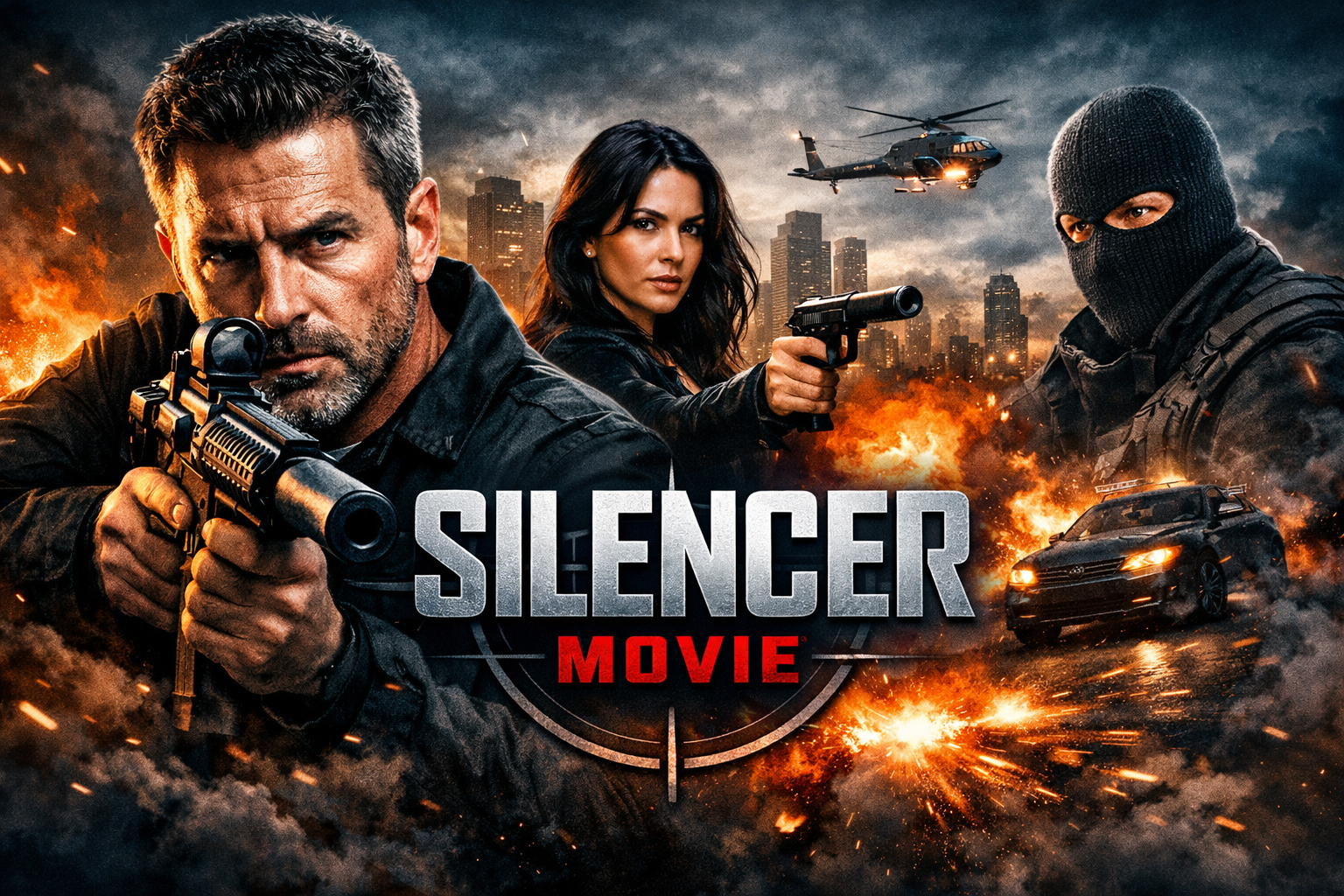
In the realm of action thrillers, few films capture the essence of redemption and vengeance quite like The Silencer movie. Released in 2018, this gritty tale directed by Timothy Woodward Jr. dives into the life of a former assassin grappling with his past while facing a high-stakes rescue mission. The Silencer movie stands out in the direct-to-video market for its blend of intense fight sequences, star-studded cameos from MMA legends, and a narrative that echoes classic revenge stories like “Taken” but with a raw, unpolished edge. Starring Johnny Messner in the lead role, alongside veterans like Danny Trejo, the film explores themes of family, loyalty, and the inescapable pull of one’s violent history. Whether you’re a fan of B-movie action or seeking an undemanding adrenaline rush, the Silencer movie offers plenty to unpack. In this comprehensive review, we’ll break down the plot, dissect the cast’s performances, analyze the production elements, and cover everything else you need to know before hitting play.
The Silencer movie first hit digital platforms in September 2018, courtesy of Cinedigm Entertainment Group. It quickly found its audience among enthusiasts of low-budget thrillers, boasting a runtime of about 88 minutes that keeps the pace brisk. While it didn’t break box office records—being a straight-to-VOD release—it has garnered a cult following on streaming services like Netflix. Critics have been divided, with some praising its no-nonsense action and others critiquing its predictable plot and uneven execution. But for viewers who appreciate films where the hero mows down bad guys with precision, the Silencer movie delivers on that front. Let’s dive deeper into what makes this film tick.
Plot Summary
At its core, the Silencer movie revolves around Frank, a retired hitman played by Johnny Messner, who has traded his deadly profession for a quieter life as a mechanic and family man. Haunted by his days as a Marine sniper in the Middle East, where the weight of his kills still lingers, Frank is pulled back into the underworld when his former employer, the ruthless drug kingpin Ochoa (Danny Trejo), kidnaps his girlfriend’s young daughter. This act of betrayal stems from Frank’s failure to complete a final hit, leading to a cascade of violence that forces him to resurrect his lethal skills.
The story kicks off with a flashback to Frank’s military past, establishing his expertise as a sharpshooter. We see him struggling with PTSD, attending AA meetings, and trying to build a stable home with his girlfriend and her child. But peace is short-lived. Ochoa, enraged by Frank’s defection, orders the kidnapping as leverage, setting Frank on a one-man warpath through New Mexico’s criminal underbelly. Along the way, he encounters Ochoa’s enforcers, including the brutal Nels (Chuck Liddell) and Timothy (Tito Ortiz), leading to brutal confrontations that highlight the film’s MMA influences.
Without spoiling key twists, the plot unfolds predictably yet effectively, with Frank methodically dismantling Ochoa’s operation. Car chases, shootouts, and hand-to-hand combat punctuate the narrative, building to a climactic showdown. The Silencer movie’s screenplay, penned by Sean Mick, draws from familiar tropes— the reluctant hero, the damsel in distress, the villainous cartel boss—but infuses them with gritty realism. Themes of redemption shine through as Frank confronts his demons, both literal and figurative, in a blood-soaked quest for justice. Clocking in under 90 minutes, the pacing rarely lags, though some subplots, like Frank’s romantic relationship, feel underdeveloped. Overall, it’s a straightforward revenge thriller that prioritizes action over intricate storytelling.
Cast and Performances
The strength of the Silencer movie lies in its ensemble cast, which mixes seasoned actors with real-life fighters for authentic intensity. Leading the charge is Johnny Messner as Frank, the titular silencer. Messner, known for roles in films like “Tears of the Sun” and “Running Scared,” brings a brooding physicality to the character. His portrayal of a man torn between his violent instincts and desire for normalcy is compelling, even if the script doesn’t always give him deep emotional layers to explore. Messner’s action sequences are highlights, showcasing his ability to convey quiet menace before unleashing fury.
Danny Trejo steals scenes as Ochoa, the drug lord antagonist. Trejo, a staple in action cinema with iconic turns in “Machete” and “From Dusk Till Dawn,” embodies the role with his trademark gravelly voice and intimidating presence. While Ochoa is a stereotypical villain—ruthless, tattooed, and surrounded by henchmen—Trejo adds nuance through subtle expressions of betrayal and rage, making him more than a one-note foe.
Supporting the leads are MMA stars Tito Ortiz and Chuck Liddell, who play Timothy and Nels, respectively. Ortiz, a former UFC Light Heavyweight Champion, brings raw power to his enforcer role, particularly in fight scenes that feel grounded in real combat experience. Liddell, another UFC Hall of Famer, delivers a memorable performance as the sadistic Nels, though his acting chops are more functional than refined. Their inclusion adds a layer of authenticity to the brawls, turning what could be generic fights into visceral showdowns.
Other notable cast members include Robert LaSardo as Lazarus, a tattooed gang member with a penchant for violence, and Nikki Leigh as Frank’s girlfriend, who provides the emotional anchor. Kai Scarlett Williams plays the kidnapped girl, delivering a performance that’s innocent and heartfelt amid the chaos. While not all performances are Oscar-worthy—the film leans on its stars’ personas more than dramatic range—the cast elevates the material, making the Silencer movie a fun watch for action aficionados.
Direction and Production
Timothy Woodward Jr., the director behind “Silencer,” crafts a film that’s unapologetically B-grade but executed with enthusiasm. Known for projects like “Gangster Land” and “American Violence,” Woodward Jr. focuses on tight, efficient storytelling, prioritizing practical effects and location shooting in New Mexico to give the movie a grounded feel. The cinematography by Pablo Diez captures the arid landscapes beautifully, contrasting the serenity of Frank’s new life with the gritty urban underbelly of cartel operations.
Production-wise, the film operates on a modest budget, evident in its straightforward sets and lack of CGI spectacle. Instead, it relies on stunt work and choreography, particularly in the fight scenes involving Ortiz and Liddell, which feel authentic due to their real fighting backgrounds. The score by Sid De La Cruz amps up the tension with pulsating electronic beats during action sequences, though it occasionally veers into generic territory. Editing keeps the film moving, but some transitions feel abrupt, perhaps due to the short runtime.
One standout aspect is the sound design, especially in sniper sequences where the “silencer” motif comes into play—muffled shots and echoing impacts heighten the suspense. Overall, Woodward Jr.’s direction ensures the Silencer movie punches above its weight class in the direct-to-video arena, delivering solid thrills without overreaching.
Themes and Analysis
Beyond the bullets and brawls, the Silencer movie touches on deeper themes like the cycle of violence and the quest for redemption. Frank’s journey mirrors that of many war veterans, struggling with PTSD and the moral cost of their actions. The film subtly critiques the military-industrial complex, showing how skills honed in combat translate to criminal enterprises, perpetuating a loop of destruction.
Family emerges as a central motif, with the kidnapping serving as the catalyst for Frank’s return to arms. It explores how personal bonds can pull even the most reformed individuals back into darkness, questioning whether true escape from one’s past is possible. While not profoundly philosophical, these elements add weight to the action, making viewers root for Frank’s success.
Critically, the movie has been accused of glorifying violence, but it also portrays its consequences—broken bodies, shattered families, and lingering trauma. In an era of superhero blockbusters, the Silencer movie offers a more human-scale take on heroism, where the hero is flawed, and the victories are pyrrhic.
Reception and Critical Reviews
Upon release, the Silencer movie received mixed reviews, with a low score on aggregator sites reflecting its niche appeal. On Rotten Tomatoes, it holds a sparse critical reception, with one reviewer calling it a “mechanical approach to movie making” that fails to engage emotionally. Audience feedback is similarly divided; some praise the raw action and Trejo’s performance, while others decry the predictable plot and subpar acting. One viewer noted it as a “brain-dead movie” with nonsensical elements, yet others found it mildly entertaining for its genre tropes.
Film blogs like The Action Elite gave it a positive spin, highlighting the one-man army narrative. Roger Moore’s review described it as “slow, sullen, morally bankrupt,” pointing out logical flaws. Despite the criticism, it has maintained visibility on streaming platforms, appealing to fans of undemanding action flicks. Its IMDb rating hovers around 3.8/10, underscoring its status as a guilty pleasure rather than a critical darling.
Behind the Scenes and Trivia
Production on the Silencer movie wrapped quickly, leveraging the star power of its MMA cast to minimize rehearsal time for fights. Trivia enthusiasts might note that Tito Ortiz and Chuck Liddell, real-life rivals in UFC, share screen time here, adding meta-tension to their scenes. Danny Trejo, at 74 during filming, performed many of his own stunts, showcasing his enduring toughness.
The film was shot in Albuquerque, New Mexico, utilizing local talent and locations to keep costs down. Interestingly, the title “Silencer” not only refers to the weapon but symbolizes Frank’s suppressed past erupting. Behind-the-scenes anecdotes include Messner drawing from real veterans’ stories for his PTSD portrayal, adding authenticity.
Conclusion
In summary, the Silencer movie is a solid entry in the action thriller genre, offering thrills for those who enjoy straightforward revenge tales. With a compelling lead in Johnny Messner, memorable villains, and pulse-pounding fights, it overcomes its budgetary constraints to deliver entertainment value. While not revolutionary, it’s worth a watch for fans of Danny Trejo or MMA crossovers. If you’re in the mood for a quick, violent escapade, queue up the Silencer movie tonight—you might just find yourself silenced by its intensity.