
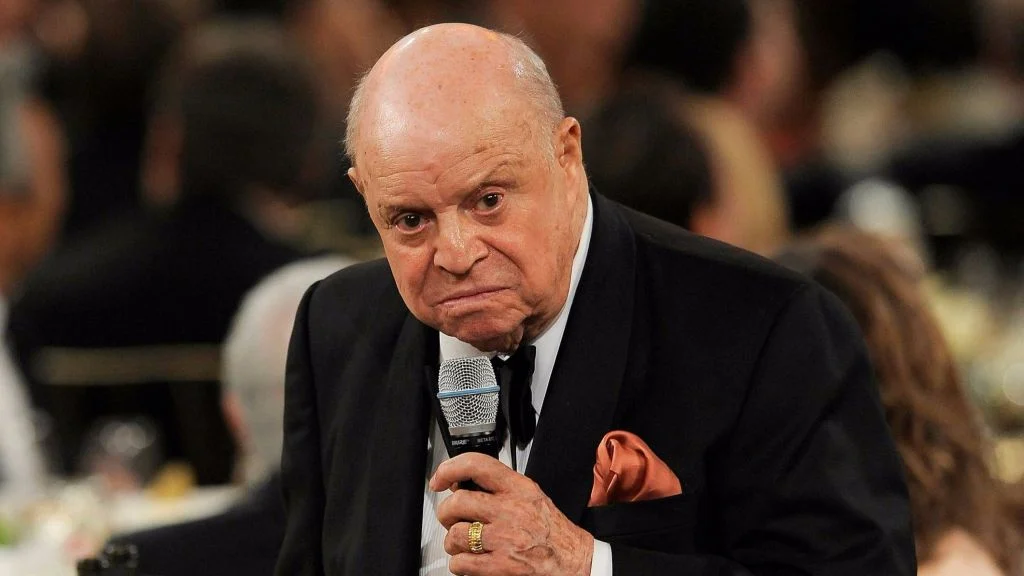
When Don Rickles passed away on April 6, 2017, the world lost not just a comedian but an institution. Known as “Mr. Warmth” and “The Merchant of Venom,” Rickles built a career on a paradox: he was the insulter that everyone loved. For more than sixty years, he filled Las Vegas showrooms, engaged in playful banter with Johnny Carson, and somehow transformed the insult “hockey puck” into a symbol of pride.
Given a career that spanned from the golden age of Las Vegas to voicing Mr. Potato Head in the Toy Story franchise, fans and financial analysts alike have long wondered: What was the actual monetary value of the legend?
The short answer is that Don Rickles had an estimated net worth of $30 million at the time of his death in 2017. However, this figure merely represents the beginning of a captivating financial journey, characterized by astute real estate investments, lucrative voice-over work, and a work ethic that persisted until he was 90 years old.
Here is a detailed breakdown of how the “King of the Roast” turned insults into a multi-million-dollar empire.
Early Life and the Path to Comedy
To understand the value of Don Rickles, one must understand the struggle that preceded his fame. Born on May 8, 1926, in Queens, New York, to Jewish immigrant parents, Rickles initially didn’t see comedy in his future. He served in the U.S. Navy during World War II, and after the war, he pursued a serious acting career, studying at the prestigious American Academy of Dramatic Arts.
For a while, Rickles was a struggling actor. He took small roles in films like Run Silent, Run Deep (1958), but the big paychecks weren’t coming. Frustrated by the lack of dramatic roles, Rickles began to pivot. He started doing stand-up in New York nightclubs, but he was bombing. He was trying to be a suave nightclub singer and a polite comedian, and it wasn’t working.
The turning point came when he realized his true talent was improvisational aggression. Inspired by the insult style of Jack E. Leonard, Rickles began teasing—and later savagely roasting—audience members. Suddenly, the crowds weren’t just listening; they were howling with laughter (and a little bit of fear). This pivot from straight actor to “insult comic” was the single most important financial decision of his life, transforming him from an unknown into a headliner.
The Vegas Years and Peak Earnings
The engine of Rickles’ wealth was Las Vegas. In the 1960s and 70s, Las Vegas was the entertainment capital of the world, and Don Rickles became one of its kings. While the Rat Pack (Frank Sinatra, Dean Martin, Sammy Davis Jr.) were the coolest cats in town, Rickles was the guy who could make Sinatra laugh by calling him a “big-eared bully.”
During his peak years as a headliner in Vegas showrooms, Rickles was earning approximately $5 million per year. Adjusted for inflation, that sum is astronomical today. Unlike touring musicians who rely on merchandise, Rickles’ revenue stream was simple: he walked on stage with a microphone and a glass of water, and he talked for an hour.
He wasn’t just a performer at the Sahara or the Desert Inn; he was a primary attraction. These Vegas contracts formed the bedrock of his $30 million fortune. He maintained this presence for decades, ensuring that even when he wasn’t on television, the cash flow from the desert never dried up.
Television and Film: A Dual Revenue Stream
While the stage was his home, television and film provided the financial padding that secured his legacy. Rickles was a staple on The Tonight Show Starring Johnny Carson, but unlike modern late-night guests promoting a project, Rickles was often there just to be funny. These appearances kept his brand hot, which drove up his live performance fees.
The “Toy Story” Windfall
One of the smartest financial moves Rickles made came late in his career. When Pixar was casting Toy Story in 1995, they needed a voice for Mr. Potato Head. While the role was initially written for another actor, the producers wrote the part specifically for Rickles’ cadence and style.
Rickles recorded lines for the first Toy Story for a standard voice-acting fee. However, the franchise exploded into a multi-billion dollar global phenomenon. By the time Toy Story 4 was released (posthumously in 2019), Rickles had become part of Disney’s highest-grossing franchise. While the exact residuals are private, sources estimate that the Toy Story franchise contributed millions to his estate due to backend deals and licensing for toys, video games, and theme park appearances.
The “Casino” Payday
On the dramatic side, Rickles proved his range in Martin Scorsese’s Casino (1995). Playing the role of Artie Piscano, a paranoid mobster, Rickles delivered a monologue that is still studied by actors today. While Scorsese films are known for their prestige, they also pay union scale rates (SAG-AFTRA). Still, the role solidified his status as a “legend,” allowing him to command higher rates for personal appearances and speaking engagements well into his 80s.
Real Estate: The Malibu Goldmine
Beyond the microphone, Rickles was a surprisingly astute real estate investor. Celebrity net worth isn’t just about cash in the bank; it is about assets.
In 2003, Don and his wife Barbara purchased a stunning estate in Malibu, California, for $1.875 million. The property was spectacular: a one-acre lot located in a gated community, featuring a private tennis court and exclusive beach access.
As the California coastal real estate market exploded, so did the value of Rickles’ home. Shortly before his death, the family listed the property for nearly $8 million. In 2020, well after his passing, the estate was sold for approximately $6.5 million. This single asset flip added significantly to the net worth of his estate, demonstrating that Rickles was not only a master of comedy but also a master of timing in the property market.
Contradictions in Reported Figures
When researching Don Rickles’ net worth, you will notice a discrepancy across the internet. While the vast majority of reputable net worth trackers cite the $30 million figure, some less reliable blog sources have suggested figures as low as $10 million.
This discrepancy likely arises from the difference between “liquid cash” and “total net worth.” At the time of his death, Rickles might have had less cash on hand because his wealth was tied up in the Malibu real estate and residuals. Furthermore, some websites incorrectly assumed that because Rickles stopped performing 80-show-a-year tours in his late 80s, his income dropped to zero, which ignores the passive income from syndication (reruns of C.P.O. Sharkey and The Dean Martin Celebrity Roasts) and Toy Story royalties.
The consensus from financial data aggregators remains firm: $30 million is the accurate valuation of his life’s work.
The Final Years and Legacy
Don Rickles did not retire. He worked until the very end. Up until 2016, he was still headlining shows in Las Vegas. He was scheduled to perform a run of shows in 2017 that were ultimately canceled due to his failing health.
He died of kidney failure at his home in Beverly Hills on April 6, 2017, just one month shy of his 91st birthday. When he passed, his wife of 52 years, Barbara, and his daughter Mindy survived him. (Tragically, his son Larry had passed away in 2011) .
The $30 million figure is a testament to longevity. In an industry where comedians often burn out or experience burnout or fade away, Rickles maintained his relevance from the Eisenhower administration to the Trump administration. He transitioned from Borscht Belt insults to blockbuster animation, proving that “The Merchant of Venom” had a Midas touch.
FAQ: Frequently Asked Questions About Don Rickles’ Net Worth
Here are the most common questions regarding the finances and life of Don Rickles.
1. What was Don Rickles’ net worth at the time of his death?
Don Rickles had an estimated net worth of $30 million when he passed away in April 2017.
2. How much did Don Rickles make per year?
During his peak in the 1960s and 1970s, Rickles earned approximately $5 million per year from stand-up, television, and film appearances.
3. Did Don Rickles leave his money to his wife?
Yes. Don Rickles was married to Barbara Sklar for 52 years until his death. It is presumed that his estate passed to Barbara and his daughter, Mindy. Barbara passed away in 2021.
4. How did Don Rickles make most of his money?
His wealth came from three main pillars: Las Vegas headlining gigs (his primary source), voice-over work (specifically the Toy Story franchise), and real estate appreciation (the sale of his Malibu home).
5. What was Don Rickles’ cause of death?
Don Rickles passed away on April 6, 2017, due to kidney failure. He was 90 years old.
6. Was Don Rickles a millionaire?
Yes, significantly so. With a net worth of $30 million, he was a multi-millionaire, ranking among the wealthiest stand-up comedians of his generation.
7. Did Don Rickles get paid for Toy Story 4?
Toy Story 4 was released in 2019, two years after his death. Disney utilized archival recordings of Rickles to voice Mr. Potato Head. His estate was compensated for the use of his likeness and voice.
8. Did Don Rickles have any financial struggles?
Unlike many celebrities who filed for bankruptcy, Don Rickles was known for being financially conservative. His 52-year marriage and stable home life contributed to a lack of financial scandals that plagued many of his contemporaries.
9. How much did Don Rickles’ house sell for?
He purchased his Malibu home for $1.875 million in 2003. After his death, it was sold for approximately $6.5 million.
10. Who was Don Rickles’ best friend in show business?
Ironically, despite his aggressive stage persona, his best friend was the calm, soft-spoken comedian Bob Newhart. Their friendship lasted for decades.