When X-Men burst onto screens in the summer of 2000, it did more than just kickstart the modern superhero movie era. It proved that comic book adaptations could be taken seriously, boasting a cast that blended classically trained Shakespearean actors with gritty, unknown talent. However, the road to assembling this iconic ensemble was a chaotic saga of near-misses, last-minute replacements, and industry-shaking gambles. This is the definitive guide to how the X-Men were cast.
The Long Road to Casting: From Animated Beginnings to Live-Action
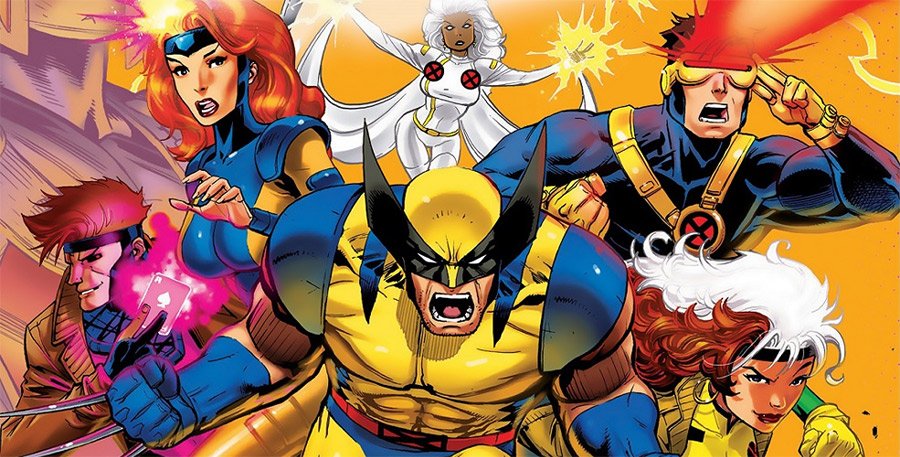
Before the live-action films, the Casting X Men franchise had already found a voice. The 1992 animated series was a cultural phenomenon, introducing a generation to the characters and setting a high bar for voice acting. Interestingly, the casting for the 2000 film drew indirect inspiration from this era. Showrunner Larry Houston noted that the film’s structure—using a young runaway mutant (Rogue in the film, Jubilee in the show) as the audience surrogate—was borrowed directly from the animated series’ pilot.
The journey to the big screen was long. Development on a live-action X-Men film began as early as 1984, with names like James Cameron attached at various points. However, it wasn’t until Bryan Singer signed on to direct in 1996 that casting discussions began in earnest. Singer, who initially turned the project down twice, eventually connected with the metaphor of prejudice at the heart of the comics.
Professor X and Magneto: The Dream Cast That Almost Didn’t Happen
The casting of Professor Charles Xavier and Erik Lehnsherr (Magneto) is often cited as the gold standard for superhero movie casting. Patrick Stewart was the first actor cast in the film, a fan-favorite for the role since the 1990s due to his striking resemblance to the comic book character and his commanding presence . Stewart later remarked that preparing for the role was the most fun he’d ever had, as the studio kept sending him stacks of comic books to read for research.
Ian McKellen was the perfect counterweight. However, McKellen almost didn’t make it to Westchester County. Shortly after accepting the role of Magneto, McKellen was offered the part of Gandalf in The Lord of the Rings. The schedules initially conflicted, forcing McKellen to consider declining the fantasy epic. Fortunately, Bryan Singer rearranged the X-Men shooting schedule to finish McKellen’s scenes by the end of 1999, freeing him to travel to New Zealand in January 2000 to begin his journey as Gandalf .
The chemistry between Stewart and McKellen was immediate and vital. Their shared history as acclaimed British stage actors lent the film a weight and legitimacy that assuaged critics and fans alike, proving that superhero films could attract top-tier thespians.
Wolverine: The Role That Launched a Superstar
If the casting of Xavier and Magneto was about prestige, casting Wolverine was about survival. This was the role that defined the franchise, and it almost went to half of Hollywood.
Bryan Singer’s first choice was Russell Crowe, fresh off L.A. Confidential. However, Crowe turned it down over a salary dispute. The search then expanded to a who ’s-who of 90s action and drama: Aaron Eckhart, Jean-Claude Van Damme, Viggo Mortensen, Keanu Reeves, and Edward Norton were all considered at various points. The studio eventually cast Dougray Scott, a Scottish actor seen as a rising star.
Then disaster (or fate) struck. Scott was committed to filming Mission: Impossible 2 opposite Tom Cruise. When *M:I-2* ran over schedule, Scott had to drop out of X-Men just three weeks into production .
Enter Hugh Jackman. A relative unknown from Australia, Jackman had been cast as a late addition and was literally brought onto a film that was already shooting. The gamble paid off spectacularly. Jackman’s portrayal became legendary, but the physical transformation was immediate. He took ice-cold showers every morning to channel Wolverine’s rage, and his costume (along with ten stunt doubles) went through 700 individual claw blades. Meanwhile, James Marsden (Cyclops), who is actually over six feet tall, had to wear platform shoes to not be towered over by the 6’3” Jackman.
The Supporting Cast: Accents, Costumes, and Practical Jokes
The ensemble brought together a diverse group of talent, each with unique challenges.
Halle Berry (Storm): Berry’s role was initially meant to feature an African accent, a trait carried over from the comics. It was ultimately dropped, making this the only film in the series where Storm attempts the accent. She also famously refused to wear the opaque white contact lenses required for the role after finding them unbearable, insisting that her eye effects be done with CGI.
Rebecca Romijn (Mystique): Romijn endured the most grueling physical transformation. Her body was covered in 110 custom prosthetics that took nine hours to apply each day. To keep her look a secret, she was isolated in a windowless room when not filming. The physical toll was extreme; on her last day of filming, she celebrated with tequila during a break, only to later vomit blue-colored makeup all over Hugh Jackman during a fight scene.
Ray Park (Toad): The martial artist, known for playing Darth Maul in Star Wars: Episode I – The Phantom Menace, was cast as Toad. Originally, the character was envisioned as a hunchback, but the design was changed to allow Park to showcase his full athletic ability.
James Marsden (Cyclops): As the leader of the X-Men, Marsden faced a unique hazing ritual. Tyler Mane (Sabretooth) played a prank on him by placing an apple box in his trailer bathroom with a note reading: “This is so you can reach your sink”.
The Costume Conundrum: Yellow Spandex vs. Black Leather
Casting wasn’t just about actors; it was about the look. Fans were outraged when promotional images revealed the X-Men would be wearing matching black leather jackets instead of the traditional blue-and-yellow spandex from the comics. Bryan Singer argued that durable black leather made sense as protective clothing for the characters.
The film famously addressed the fan backlash directly. When Wolverine first sees the uniforms and asks what they are supposed to be, Cyclops (Marsden) retorts: “What would you prefer, yellow spandex?” While the black leather worked on screen, the practical reality was a nightmare. The suits were so stiff at the start of filming that the cast couldn’t even hop over a small ledge during their first day of shooting.
The Revolving Door: Characters Who Kept Changing
The X-Men franchise, particularly the original trilogy, was notorious for recasting supporting roles, a habit that began almost immediately.
Kitty Pryde (Shadowcat): This character holds the record for being recast the most times in the original trilogy without any narrative time jump. Sumela Kay played the role in a cameo role in X-Men (2000). Katie Stuart took over for a brief appearance in X2 (2003). By the time X-Men: The Last Stand (2006) rolled around, Kitty had a substantial role, and director Brett Ratner cast a then-up-and-coming Elliot Page to bring the character to the forefront.
Other Shifts: The school in X-Men was filled with background mutants who would later become major players. Fans can spot Iceman (Shawn Ashmore), Pyro (Aaron Stanford), Colossus (Daniel Cudmore), and Jubilee (Katrina Florece) in the background of Singer’s first film before they were properly introduced in the sequels.
The Kevin Feige Connection
One of the most fascinating footnotes in the casting history of X-Men is the presence of a young Kevin Feige. Before he became the president of Marvel Studios and the architect of the MCU, Feige served as an associate producer on the 2000 film. It was his first major credit in the superhero genre. Watching the chaos of the X-Men production—from the last-minute Wolverine casting to the balancing of budgets—undoubtedly shaped his approach to building the Marvel Cinematic Universe years later.
Casting the Future: The MCU Reboot
As of 2025, the casting X Men franchise is gearing up for another evolution: integration into the Marvel Cinematic Universe. According to recent reports, the approach to casting this time is shifting dramatically. Marvel Studios is reportedly targeting “younger talent, rather than A-listers, to keep the cost down”.
With a “youthful” iteration planned by director Jake Schreier, the studio is looking to avoid the high salaries of established A-listers, instead focusing on finding fresh faces to carry the franchise for the next decade. This marks a stark contrast to 2000, when Singer relied on the gravitas of Stewart and McKellen to anchor the film. Now, the “field is wide open” for a new generation of mutants to emerge.
FAQ
Why did they choose black leather instead of the classic comic book costumes?
Bryan Singer wanted the costumes to feel like functional protective gear rather than spandex pajamas. Test designs of the traditional blue-and-yellow suits were reportedly unsuccessful, and Singer believed the black leather looked more realistic for a team of fugitives. The film also included a meta-joke acknowledging fan frustration with Cyclops’ line: “What would you prefer, yellow spandex?”
Who was almost cast as Wolverine before Hugh Jackman?
Nearly everyone. Russell Crowe was the top choice, but turned it down over salary. Dougray Scott was officially cast but had to drop out due to scheduling conflicts with Mission: Impossible 2. Other actors considered included Viggo Mortensen, Keanu Reeves, Jean-Claude Van Damme, Aaron Eckhart, and Edward Norton.
Did any actors from the 1990s X-Men animated series appear in the movies?
While no voice actors from the 1992 series had major roles in the first film, David Hemblen, who voiced Magneto in the animated series, was considered for the live-action role. Veteran actor Bruce Davison was eventually cast as Senator Kelly, a role that was not in the animated series. The connection remains more in terms of thematic inspiration than direct casting.
Why was Kitty Pryde played by three different actresses in the original trilogy?
Kitty Pryde was a minor background character in the first two films, allowing for a recasting between X-Men and X2 without much notice. By the time The Last Stand was made, the character had a larger role in the script. Director Brett Ratner wanted a more established actor to handle the increased screen time, leading to Elliot Page taking over the role.
How did Patrick Stewart and Ian McKellen’s casting affect the franchise?
It legitimized the genre. At a time when superhero movies were still recovering from the campy failures of the late 90s, hiring two of the most respected Shakespearean actors in the world signaled that X-Men was taking its themes of prejudice and drama seriously. Their off-screen friendship also translated to incredible on-screen chemistry
What is the status of the X-Men casting for the Marvel Cinematic Universe?
As of late 2025, Marvel Studios is in the early stages of casting for a reboot. The studio is reportedly prioritizing young, relatively unknown actors to play the mutants, partly to keep production costs manageable and partly to build a long-term franchise around fresh faces. Director Jake Schreier and writer Michael Lesslie are leading the project .