
Introduction
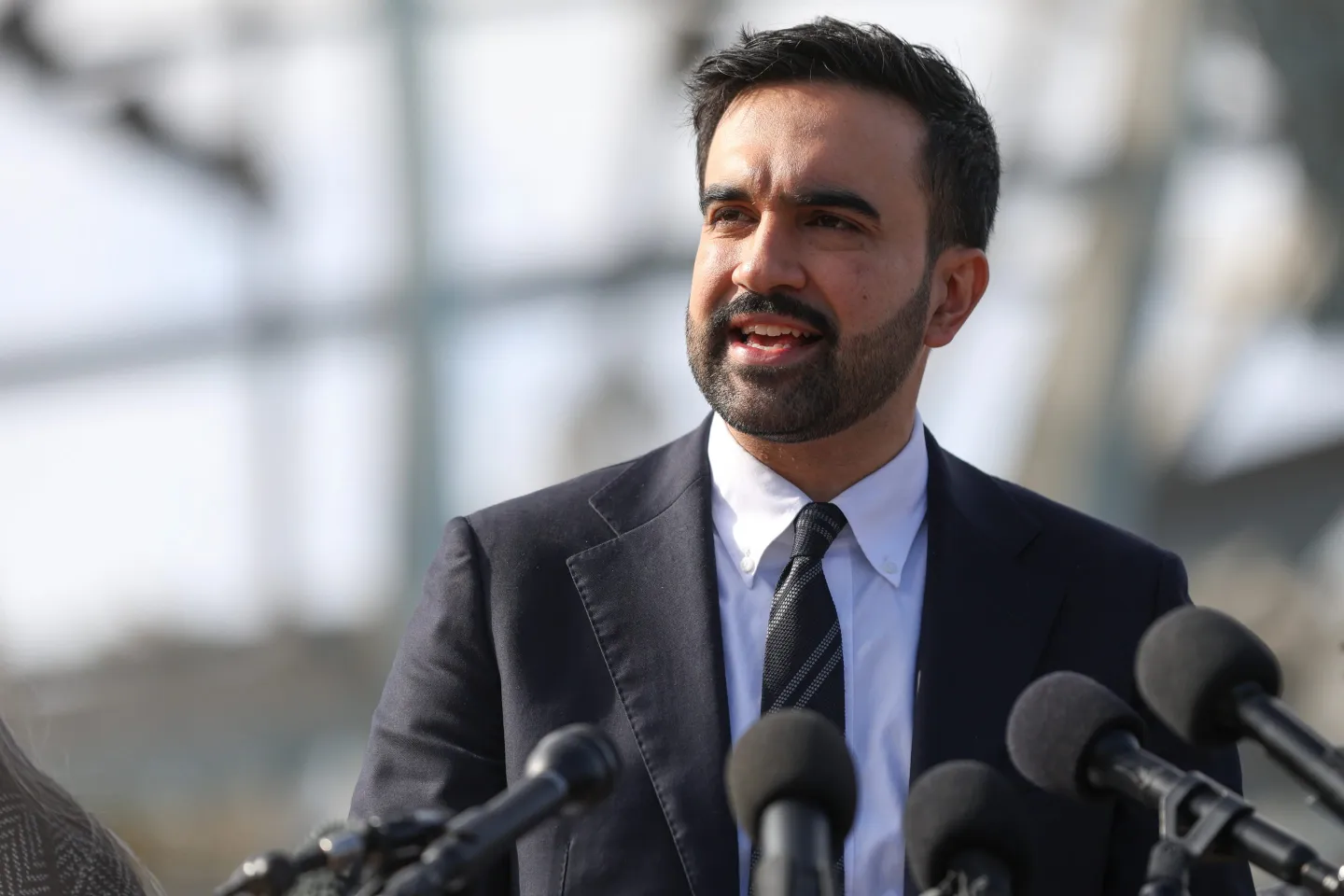
When Zohran Mamdani took the oath of office as the 111th mayor of New York City in January 2026, his victory represented more than a routine transition of power. At 34 years old, Mamdani became the youngest mayor of the nation’s largest city in over a century, and the first Muslim and South Asian American to hold the office. His ascent from a state assemblyman representing a working-class Queens district to the helm of America’s most influential metropolis was anything but conventional—and the political machinery that propelled him, along with the agenda he now seeks to implement, has ignited a firestorm of controversy that continues to shape his early tenure.
Mamdani’s rise did not occur in a vacuum. It was the product of a carefully constructed network of progressive activists, Muslim organizing groups, and Democratic Socialists of America (DSA) affiliates that had been cultivated over nearly a decade. This infrastructure, funded in part by major philanthropic organizations including foundations associated with George Soros, helped transform an unknown organizer into a mayoral candidate capable of defeating establishment opponents. Today, as Mamdani governs, his social and political agenda is being tested against the realities of running a city of 8.5 million people, facing both fierce opposition from critics who view his administration as dangerously radical and enthusiastic support from those who see him as a transformative figure.
This article examines the multifaceted influence of Zohran Mamdani social and political agenda, exploring the political network that brought him to power, the key policy proposals defining his administration, the controversies surrounding his governance, and the broader implications for New York City and American urban politics.
The Political Infrastructure Behind Mamdani’s Rise
A Network Forged in Activism
Understanding Mamdani’s governing agenda requires examining the political machine that built him. A Fox News Digital investigation identified over 110 groups that supported Mamdani’s mayoral campaign, revealing a tight inner circle of organizations that identify as Muslim or socialist working in coordination with 76 Democratic Party affiliates, allied groups, and labor unions. Central to this network were two key organizational constellations: Linda Sarsour’s MPower organizations and Emgage, a Muslim-American civic engagement group.
The financial backing for this infrastructure was substantial. Between them, MPower and Emgage received nearly $2.5 million from George Soros’s Open Society philanthropies in recent years. Emgage Action, the political arm, received $1.8 million from the Open Society Policy Center and an additional $1.35 million from the Foundation to Promote Open Society. These grants, according to Open Society Foundations, occurred years before the mayoral race and were intended to support civic engagement and counter discrimination, not directly fund political candidates.
Mamdani’s relationship with this network dates back to at least 2017, when he was photographed canvassing alongside Sarsour for a City Council candidate. By 2018, he had joined the board of the Muslim Democratic Club of New York, an organization Sarsour co-founded to mobilize Muslim voters and elect progressive Democrats. This role provided Mamdani access to voter lists, donor networks, and organizing infrastructure that would later power his own campaigns.
The Role of Religious Endorsements
A particularly controversial aspect of Mamdani’s political ascent involved his cultivation of relationships with Muslim clerics who hold what critics describe as extremist views. During his campaign, Mamdani visited Imam Muhammad Al-Barr of the Islamic Society of Bay Ridge just months after Al-Barr had publicly prayed to “annihilate” Israel. He also met with Imam Siraj Wahhaj of Brooklyn’s Masjid Al-Taqwa, whom Mamdani called “one of the nation’s foremost Muslim leaders”. Wahhaj has a lengthy record of controversial statements, including denouncing the U.S. government as “controlled by Shaitan” (the devil) and supporting Islamic punishments such as stoning for adultery.
These associations became a focal point for opposition during the campaign, with critics arguing they reflected an extremist orientation incompatible with governing a diverse, multicultural city. Supporters, however, viewed the criticism as Islamophobic and rooted in an unwillingness to accept Muslim political leadership.
The Socialist-Islamist Coalition Thesis
Political observers have debated whether Mamdani’s rise represents a new coalition model in American politics. Critics argue that his ascent reflects a deliberate collaboration between socialist activism and Islamist organizing, lubricated by foundation funding and normalized through overlapping networks of political operatives and nonprofits. Proponents, conversely, see Mamdani as representing a natural evolution of progressive urban politics—a figure who combines working-class economic concerns with principled positions on foreign policy and civil rights.
Dalia Al-Aqidi, an Iraqi American Muslim running against Democratic Rep. Ilhan Omar, characterized Mamdani’s rise as “the product of deliberate design: a sophisticated collaboration between socialist activism and Islamist organizing, lubricated by millions in foundation grants and political donations”. Regardless of how one characterizes this infrastructure, its effectiveness in delivering electoral victory is undeniable.
The Policy Agenda: Affordability, Equity, and Transformation
Four Pillars of Economic Reform
Mamdani campaigned on a platform built around addressing New York City’s affordability crisis, and his policy proposals reflect a sweeping vision of government intervention in the economy. His agenda rests on four strategic pillars: housing, wages, public transportation, and taxation.
Housing: Mamdani has proposed freezing rents on nearly one million rent-stabilized apartments and constructing 200,000 new affordable housing units over a decade at a projected cost of $100 billion. His first day in office saw the signing of three executive orders on housing, including one reviving the mayor’s office to protect tenants and others establishing task forces to accelerate housing development.
Wages: The mayor has called for raising the minimum wage to $30 per hour by the end of the decade, a significant increase from current levels that would position New York City as having one of the highest minimum wages in the nation.
Transportation: Fare-free buses represent one of Mamdani’s signature proposals, with an estimated annual cost of $800 million. During his inaugural address, he framed this initiative as part of a broader vision: “Getting on a bus without worrying about a fare hike or whether you’ll be late to your destination on time will no longer be deemed a small miracle because we will make buses fast and free”.
Public Services: Other proposals include universal child care at $6 billion annually and a pilot program of five city-run grocery stores at $60 million per year. These initiatives are designed to address what Mamdani calls the “small expectations” that have limited previous administrations—he promises instead to “govern expansively and audaciously”.
Funding Challenges and Political Realities
The ambitious scope of Mamdani’s agenda raises significant questions about funding and implementation. The mayor has proposed funding these initiatives through tax increases on corporations and top earners, but such measures require state approval—and there is no guarantee that the New York State Legislature, which includes members with different priorities, will sign off. Similarly, City Council approval is needed for local initiatives like city-run grocery stores.
Beyond legislative hurdles, Mamdani faces potential resistance from the real estate sector and traditional financial institutions that have long shaped New York City’s political landscape. During his campaign, 26 billionaires reportedly contributed more than $22 million to defeat him, including Michael Bloomberg ($8.3 million), the Lauder family ($2.6 million), and Bill Ackman ($1.75 million). These figures suggest that Mamdani’s agenda is viewed as a direct threat by segments of the city’s economic elite—a conflict that will likely define much of his tenure.
Political Pragmatism in Practice
Despite his progressive rhetoric, Mamdani has demonstrated political pragmatism in his early months in office. His meeting with President Donald Trump, despite sharp ideological differences, was cited by analysts as evidence of his ability to prioritize the city’s interests. More recently, he has drawn criticism from some allies for skipping rallies aimed at Trump and Governor Kathy Hochul, instead focusing on budget negotiations and maintaining working relationships with both executives.
This pragmatism extends to his administrative appointments. Mamdani reportedly plans to keep Jessica Tisch as police commissioner—Tisch comes from a prominent Jewish family that contributed $1.2 million to efforts to defeat Mamdani. He has also stated that he will include Zionists in his administration based on merit rather than identity. These moves suggest a governing style that may moderate some of the more uncompromising positions of his campaign.
Controversies and Governance Challenges
The Health Department Working Group Controversy
Perhaps the most significant controversy of Mamdani’s early tenure has centered on the Department of Health and Mental Hygiene’s “Global Oppression and Public Health Working Group.” The group, created by staffers who described it as a response to the “ongoing genocide in Palestine,” met during work hours at the agency’s headquarters to discuss topics including “the impact of global oppression” on health equity and “supporting colleagues negatively impacted” by such oppression.
Critics across the political spectrum have denounced the group as an inappropriate use of taxpayer resources. City Council Speaker Julie Menin called for an investigation into whether taxpayer funds were misused, stating: “Our health care officials should be fighting infectious diseases and addressing skyrocketing health care costs instead of spending public time debating geopolitics on city time”. Council Member Lynn Schulman, who chairs the health committee, noted the group’s activities were “especially troubling given the alarming rise of antisemitism we are seeing in New York City”.
Sen. Bill Cassidy (R-La.), chair of the Senate Health, Education, Labor and Pensions Committee, warned that the city’s health department risked losing federal funding—approximately $600 million annually—if it continued to prioritize political agendas over public health. The controversy has become emblematic of broader concerns about whether Mamdani’s administration can maintain focus on core municipal services while navigating divisive geopolitical issues.
Accusations of Antisemitism and Responses
The health department controversy has intensified accusations that Mamdani’s administration tolerates or encourages antisemitism. Commentary Magazine characterized the working group as part of a pattern: “Zohran Mamdani pledging to confront anti-Semitism while his own administration staffers engage in taxpayer-funded Jew-baiting is the kind of hypocrisy we will hopefully never get used to”. The magazine argued that Mamdani’s victory was “taken as a green light for anti-Semites to hijack government services”.
Jewish city workers have expressed alarm about the climate in city agencies. Moshe Spern, president of the NYC United Jewish Teachers, said: “Antisemitic and anti-Israel presentations are happening across city agencies. Working in NYC, whether it’s the DOH or the DOE, is very difficult. Jewish city workers are struggling, and honestly, all agencies are turning a blind eye”.
Mamdani has not directly addressed these accusations, and his office did not respond to requests for comment about the health department group. The administration’s handling of such controversies may prove decisive in shaping public perceptions of his leadership.
Immigration Enforcement and Federal Relations
Mamdani has taken a confrontational stance toward federal immigration enforcement, calling for the abolition of Immigration and Customs Enforcement (ICE) and describing the agency as “rogue” and “reckless”. His administration limits cooperation with ICE detainers to cases involving judicial warrants and recent convictions for violent or serious crimes.
This stance has drawn criticism following high-profile incidents, including the alleged murder of 83-year-old Air Force veteran Richard Williams by a Honduran national who had been deported from the U.S. four times. Critics argue that sanctuary policies enable such tragedies, while Mamdani’s supporters contend that cooperation with ICE would undermine trust between immigrant communities and law enforcement.
Media Representation and Public Perception
The Role of Conservative Media
Mamdani has been a frequent target of conservative media outlets, which have characterized his rise and governance as fundamentally threatening to New York City. Fox News investigations have detailed his network of supporters and raised questions about the sources of his political funding. The New York Post has consistently portrayed his administration as extreme, using shorthand nicknames and highlighting controversies like the health department working group.
This coverage has shaped public perceptions, particularly among voters who did not support Mamdani. However, the intensity of opposition may also have rallied his base, with supporters viewing criticism as evidence that he is effectively challenging established power structures.
Progressive and International Perspectives
Progressive outlets and international media have offered more sympathetic portrayals. Consortium News characterized opposition to Mamdani as a “shamelessly debased smear campaign” driven by “Zionist fanatics and capitalist greedheads”. The analysis suggested that Mamdani’s appeal—particularly his stance on Palestine and his social democratic economic policies—represented a generational shift in American politics.
International coverage has noted the significance of Mamdani’s election for Muslim representation. An analysis by TRENDS Research and Advisory described his victory as “a potential turning point in how one of the world’s most influential cities is governed, financed, and represented on the international stage”. The analysis highlighted his effective use of digital platforms to connect with younger voters and transform online engagement into political momentum.
The Cuomo Comparison
Throughout the campaign and into his tenure, comparisons to former Governor Andrew Cuomo have framed Mamdani’s image. The Liberal Party of New York, which endorsed Cuomo, dismissed Mamdani as “nothing more than the second coming of Alexandria Ocasio-Cortez”—a figure with “no training to run anything” who benefited from favorable electoral circumstances. This framing casts Mamdani as a charismatic but inexperienced outsider whose agenda represents appealing but impractical campaign promises.
Challenges to Implementation and Political Survival
Structural Obstacles
Mamdani’s ability to implement his agenda faces significant structural obstacles. The mayor’s office in New York City, while powerful, operates within a system of checks and balances that includes an independent City Council, a state government with authority over taxation and many policy areas, and federal oversight on numerous issues. Even with unified support from the Council—which is not guaranteed—Mamdani would need state approval for major tax increases and face potential legal challenges to initiatives like rent freezes.
The city’s budget process presents another challenge. With approximately 20% of the health department’s budget—$600 million of about $2 billion—coming from federal funds, threats to withhold such funding could have severe consequences. The Trump administration has demonstrated a willingness to use funding as leverage against sanctuary cities, creating ongoing uncertainty for Mamdani’s administration.
Coalition Management
Maintaining the coalition that brought Mamdani to power while governing effectively will require careful political management. His decision to skip rallies targeting Trump and Hochul—events supported by the New York City DSA chapter—indicates tensions between governing pragmatism and activist expectations. Similarly, his willingness to include Zionists in his administration and retain a police commissioner from a family that opposed his election may alienate some supporters.
At the same time, his retention of progressive positions—including his call for ICE abolition and his endorsement of the “No Kings” protests—signals that he has not abandoned his base. Balancing these competing pressures will define his political trajectory.
The Risk of Overreach
Some observers warn that Mamdani’s ambitious agenda risks overreach. The contrast between campaign promises and governing realities could produce disillusionment among supporters who expected rapid transformation. If major initiatives fail to materialize due to funding constraints, legislative opposition, or implementation challenges, Mamdani could face the same critiques of ineffectiveness that plagued previous progressive mayors.
Conclusion: A Defining Moment for Progressive Urban Governance
Zohran Mamdani’s tenure as mayor of New York City represents a test case for a particular vision of progressive urban governance—one that combines social democratic economic policies with principled positions on foreign policy and civil rights, and that relies on a political infrastructure combining socialist activism with identity-based organizing. Whether this model proves sustainable will depend on Mamdani’s ability to deliver tangible results while managing the intense opposition his administration has already generated.
The early months of his tenure have revealed both the potential and the pitfalls of this approach. His housing initiatives and affordability proposals address genuine crises facing New Yorkers, and his use of digital organizing demonstrates innovative approaches to political engagement. Yet controversies like the health department working group raise legitimate questions about whether his administration can maintain focus on core municipal responsibilities while navigating divisive issues.
As Mamdani’s first year in office continues, several questions will determine his legacy: Can he secure the funding and legislative approvals needed to implement his agenda? Will he be able to maintain governing coalitions while satisfying the activists who powered his rise? Can he navigate federal relations without sacrificing either the city’s interests or his principles? And, perhaps most fundamentally, can he demonstrate that his model of governance can deliver tangible improvements in the lives of New Yorkers?
The answers to these questions will have implications far beyond New York City. As one of the nation’s largest cities and a global media capital, New York serves as a laboratory for urban governance. If Mamdani succeeds, his approach could become a model for progressive cities across the country. If he fails, it could discredit the coalition-building model that brought him to power. Either way, the influence of Zohran Mamdani’s social and political agenda will be felt for years to come.
Frequently Asked Questions
Q1: Who is Zohran Mamdani, and how did he become mayor of New York City?
Zohran Mamdani is a 34-year-old Democratic Socialist who served as a New York State Assembly member before winning the mayoral election in 2025. His ascent was supported by a network of Muslim organizing groups, socialist organizations, and Democratic Party affiliates, with significant funding from progressive philanthropies. He took office in January 2026 as the city’s first Muslim and South Asian mayor and the youngest in over a century.
Q2: What are Mamdani’s main policy proposals?
Mamdani’s agenda focuses on affordability and includes four main pillars: housing (rent freezes on one million apartments and 200,000 new affordable units), wages ($30 minimum wage by 2030), transportation (fare-free buses), and public services (universal child care and city-run grocery stores). These initiatives are estimated to cost billions annually and would require significant tax increases on corporations and wealthy individuals.
Q3: What is the “Global Oppression Working Group” controversy?
In early 2026, it was revealed that New York City Department of Health staff had created a “Global Oppression and Public Health Working Group” focused on the Israeli-Palestinian conflict, which critics said was described as a response to the “genocide in Palestine.” The group met during work hours and sparked accusations of antisemitism and misuse of taxpayer funds, prompting calls for investigation and threats to federal funding.
Q4: What are the main criticisms of Mamdani’s administration?
Critics accuse Mamdani of running an administration that tolerates antisemitism, as evidenced by the health department controversy and his associations with controversial clerics. They also question his qualifications to run the city, noting his lack of executive experience, and express concern about his confrontational stance toward federal immigration enforcement. Conservative critics also point to his network of supporters, which they characterize as extremist.
Q5: How has Mamdani responded to accusations of antisemitism?
Mamdani has not directly addressed most specific accusations, though during his campaign, he stated he would include Zionists in his administration based on merit and has maintained relationships with Jewish community leaders. His office did not respond to requests for comment about the health department working group.
Q6: What challenges does Mamdani face in implementing his agenda?
Mamdani faces significant structural obstacles, including the need for state approval for major tax increases, potential legal challenges to initiatives like rent freezes, and the threat of losing federal funding. He also must navigate relationships with a City Council that may not fully support his agenda, manage a diverse coalition of supporters with competing priorities, and address the city’s immediate public health and safety challenges.
Q7: What is Mamdani’s position on immigration enforcement?
Mamdani has called for abolishing ICE, describing the agency as “rogue” and “reckless.” His administration limits cooperation with ICE detainers to cases involving judicial warrants and recent convictions for violent crimes. He has endorsed protests against federal immigration enforcement while maintaining that his policies are about public safety and community trust.
Q8: How does Mamdani’s election fit into broader political trends?
Analysts view Mamdani’s election as representing a generational shift in American urban politics, combining social democratic economic policies with a progressive foreign policy perspective. His use of digital organizing and his ability to mobilize young voters, particularly around the issue of Palestine, suggest new models of political engagement. Whether this model proves sustainable will depend on its governing effectiveness.